You cleared it. You celebrated. And then — three weeks later — it’s back. The same jawline cluster. The same angry cheek cyst. The same post-inflammatory mark slowly fading when another pimple opens right beside it.
If this story sounds familiar, you are not alone — and you are not doing anything wrong, exactly. But you may be missing a few things your dermatologist wishes you knew.
Acne is not just a teenage rite of passage. In India, adult acne affects an estimated 35–40% of adults in their 20s and 30s, with a notable rise among women in their 30s and 40s — a trend documented across Asian skin types in the Journal of Dermatology (Perkins et al., 2012; Cong et al., 2019). Hyderabad’s combination of heat, humidity, high pollution index, and stress makes it one of the trickier environments to keep skin consistently clear.
The real question isn’t why did acne come back once. It’s why does it keep coming back in cycles — and what can you actually do to break them?
Understanding the Acne Cycle — It’s More Complex Than “Dirty Skin”
Acne is not a hygiene problem. It is a multifactorial inflammatory disorder of the pilosebaceous unit — the hair follicle and its attached sebaceous (oil) gland. Each recurrence involves at least one of four key drivers:
- Excess sebum production — triggered by androgens, diet, heat, or stress
- Abnormal follicular keratinisation — where dead skin cells clog the pore instead of shedding normally
- Cutibacterium acnes (C. acnes) proliferation — the anaerobic bacteria that thrives in clogged, oily pores
- Inflammation — the immune response that turns a blocked pore into a painful, visible breakout
When you treat one driver without addressing the others, the cycle restarts. This is why a single course of antibiotics clears you up for two months and then acne returns — often worse.
The 7 Real Reasons Your Acne Keeps Coming Back
1. Hormonal Fluctuations Are Driving the Flare
This is the single most common cause of recurring adult acne, especially in women. Your acne isn’t random — look at the timing. Breakouts around your jawline, chin, or lower cheeks that appear predictably in the week before your period point directly to hormonal shifts.
In the luteal phase (days 15–28 of your cycle), progesterone rises and stimulates sebum production. Simultaneously, oestrogen falls, reducing its natural anti-inflammatory effect on skin. The result: more oil, more inflammation, more acne.
Polycystic Ovarian Syndrome (PCOS) amplifies this dramatically. A 2020 study in Frontiers in Endocrinology found that women with PCOS have significantly higher androgen-driven sebum production — and standard topical acne treatments alone are rarely sufficient without addressing the underlying hormonal picture.
What to do: If your acne flares in the same pattern every month, speak to your dermatologist and gynaecologist together. Hormonal management — whether through oral contraceptives, spironolactone, or PCOS-specific treatment — can be a game-changer for skin that won’t respond to topicals alone.
2. You Stopped Treatment Too Early
Here is the most common mistake I see in clinic: a patient starts a prescribed regimen, sees improvement in four weeks, and stops. Three weeks later, acne is back — sometimes worse than before.
Acne treatment requires maintenance. The AAD (American Academy of Dermatology) guidelines recommend continuing maintenance therapy for a minimum of 6–12 months after clearance. IADVL consensus similarly emphasises long-term management over short-term courses.
Stopping topical retinoids or benzoyl peroxide early allows C. acnes to repopulate the follicle and sebum to re-accumulate. The skin hasn’t learnt to regulate itself — it simply paused.
What to do: Think of acne treatment in two phases — clearance (the acute phase, 8–12 weeks) and maintenance (the long game, 6–12 months minimum). Do not stop without your dermatologist’s guidance.
3. Antibiotic Resistance Has Set In
If you’ve had multiple courses of oral antibiotics (doxycycline, minocycline, azithromycin) for acne over the years, there is a meaningful chance your skin’s C. acnes strains have developed resistance. A 2019 global study in the British Journal of Dermatology found antibiotic-resistant C. acnes in over 50% of acne patients who had previously received antibiotic treatment.
Antibiotic resistance explains why your third course of doxycycline worked less well than the first. It’s not a dosage issue — it’s a microbial adaptation.
What to do: Dermatologists now strongly recommend combination therapy — antibiotics paired with benzoyl peroxide (which does not cause resistance) to reduce the emergence of resistant strains. Long-term antibiotic monotherapy is no longer best practice. If antibiotics are failing, isotretinoin or spironolactone (for women) may be more appropriate options — discuss with your dermatologist.
4. Your Skincare Routine Is Secretly Clogging Your Pores
This one is frustrating because the products causing your breakouts may be marketed as “acne-safe.” In India’s humid climate, several common skincare ingredients can trigger comedones in acne-prone skin:
- Heavy occlusives — coconut oil, petroleum jelly, certain shea butter formulations
- Silicones in high concentrations — particularly dimethicone in thick primers or sunscreens
- Alcohol-based toners — strip the barrier, triggering rebound sebum production
- Physical scrubs — cause micro-tears, spreading bacteria across the face
Fragrance is another hidden trigger. A study in Contact Dermatitis found that fragrance ingredients are among the most common causes of acne-like contact dermatitis — inflammation that mimics and worsens acne.
What to do: Audit your entire routine — cleanser, moisturiser, sunscreen, makeup primer. Look for terms like non-comedogenic, oil-free, and fragrance-free. In Hyderabad’s heat, switch heavy creams for lightweight gel moisturisers in summer. And never skip sunscreen — [unprotected UV exposure worsens post-acne pigmentation](/skin/pigmentation/) dramatically on Indian skin. Use SPF 50+ PA++++, specifically, for adequate broad-spectrum protection.
5. Diet and Gut Health Are Playing a Bigger Role Than You Think
The diet-acne link was once dismissed as myth. It isn’t. High-glycaemic-index (GI) foods — white rice, refined bread, sweets, sweetened beverages — spike insulin and IGF-1 (insulin-like growth factor 1), both of which upregulate sebum production and stimulate androgen activity in the skin.
A landmark randomised controlled trial published in the American Journal of Clinical Nutrition (Smith et al., 2007) demonstrated that a low-GI diet significantly reduced acne lesion counts compared to a control diet over 12 weeks.
Dairy is a nuanced story. Skim milk (not full-fat) has been associated with acne flares in several epidemiological studies, possibly due to whey protein’s insulin-stimulating effect. Whey protein supplements — popular in gym-going populations — are a frequently missed acne trigger in young Indian men.
What to do: Reduce high-GI foods, experiment with reducing skim milk and whey supplements, increase omega-3 intake (fish, walnuts, flaxseed), and maintain adequate zinc levels (nuts, legumes, seeds). This won’t replace medical treatment but it removes fuel from the fire.
6. Stress Is Rewriting Your Skin’s Chemistry
Cortisol — your primary stress hormone — directly stimulates sebum production and promotes inflammatory cytokine release in the skin. A 2003 study by Chiu et al. in the Archives of Dermatology demonstrated a significant correlation between perceived stress and acne severity in university students during examination periods.
In Hyderabad’s fast-paced startup and corporate culture, chronic low-grade stress is the norm. Your skin registers every late night, every tight deadline, every unresolved anxiety.
What to do: Sleep is non-negotiable — 7–8 hours allows skin repair and cortisol regulation. Regular exercise (which also reduces IGF-1 and improves insulin sensitivity), meditation, and basic boundaries around screen time before bed all have measurable downstream effects on skin inflammation.
7. Post-Inflammatory Hyperpigmentation (PIH) Is Being Confused for Active Acne
Here’s something that trips up many patients: they believe their acne is “back” when what they’re actually seeing is [post-inflammatory hyperpigmentation (PIH)](/skin/pigmentation/) — the flat, dark marks left behind after a pimple heals.
These marks are NOT active acne. They require different treatment (niacinamide, vitamin C, azelaic acid, gentle chemical exfoliants) and, critically, strict SPF 50+ PA++++ daily. UV exposure from Hyderabad’s intense summer sun will darken PIH dramatically and delay resolution by months.
[Sensitive or compromised skin](/skin/sensitive-allergic-skin/) often develops more pronounced PIH, making sun protection even more essential.
What to do: Learn to distinguish between raised, active lesions (acne) and flat, discoloured marks (PIH). They share the same space on your face but are entirely different problems requiring different solutions. If you’re treating both as “acne,” you’re likely over-treating with actives and under-protecting with SPF.
The Acne Recurrence Roadmap — A Dermatologist’s Protocol
Breaking the acne cycle requires a layered approach:
Step 1 — Diagnosis first, treatment second. Acne subtypes (comedonal, papulopustular, nodulocystic, hormonal) respond to different treatments. What works for teen comedones won’t work for adult hormonal acne.
Step 2 — Address ALL four drivers simultaneously. A good acne regimen typically combines a keratolytic (retinoid or BHA), an antibacterial (benzoyl peroxide), and either a topical antibiotic or systemic treatment for inflammatory lesions.
Step 3 — Barrier first. [Sensitised, compromised skin](/skin/sensitive-allergic-skin/) cannot tolerate actives well. Rebuilding the barrier (with ceramides, gentle cleansers, and a solid moisturiser) before loading on retinoids prevents the “purging spiral” many patients experience.
Step 4 — Maintenance mode after clearance. Minimum 6 months of maintenance therapy after clearance, using lower concentrations or alternate-night application of actives.
Step 5 — SPF 50+ PA++++ — no exceptions. Every single day. Skipping sunscreen while on acne treatment is counterproductive — most actives increase photosensitivity, and UV drives both PIH and sebum production. An ideal choice: a light, non-comedogenic SPF 50+ PA++++ that works as your daily moisturiser in summer months.
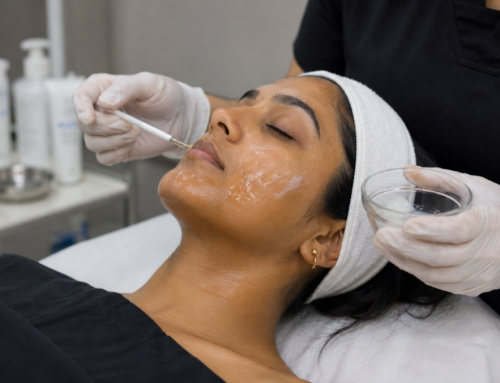
Step 6 — Treat scars separately. Once active acne is controlled, [acne scarring](/skin/acne-scars/) — whether atrophic (pitted) or hypertrophic — requires targeted treatment. Options include microneedling, fractional CO₂ laser, chemical peels, and subcision. Treating scars while active acne is present is rarely effective.
When to See a Dermatologist (Immediately)
Some acne presentations require professional intervention without delay:
- Nodulocystic acne (large, painful, deep cysts) — topicals will not touch this; oral isotretinoin is typically indicated
- Acne that leaves significant scarring — every scar is a missed opportunity for early intervention
- Acne in adult women over 30 with irregular periods — screen for PCOS
- Acne that doesn’t respond to 2–3 months of consistent treatment — time to reassess the regimen
- Acne alongside other symptoms — sudden hair loss, weight changes, irregular cycles — may signal an underlying hormonal disorder
A Note on Indian Skin and Acne
Fitzpatrick skin types III–V — which encompasses most Indians — carry a higher risk of post-inflammatory hyperpigmentation after acne. This means each uncontrolled breakout doesn’t just resolve; it leaves a mark that can take 6–18 months to fade without active treatment.
This is why the stakes of uncontrolled, recurring acne are higher for Indian skin than for lighter phototypes. The [discolouration and uneven tone](/skin/uneven-tone-tanning/) that results can persist for years, creating a compounding burden on skin confidence and wellbeing.
Getting acne under control quickly, maintaining that control, and protecting religiously with SPF 50+ PA++++ is not cosmetic vanity — it is sound skin health economics.
Frequently Asked Questions
Q1: Why does my acne always come back after antibiotics?
Antibiotics treat the bacterial component of acne but do not address sebum excess, abnormal keratinisation, or hormonal drivers. Once antibiotics are stopped, C. acnes repopulates — especially if resistance has developed. Long-term acne control requires a multi-pronged approach beyond antibiotics alone.
Q2: Can acne return after isotretinoin (Accutane)?
Isotretinoin produces long-term remission in approximately 85% of patients, according to studies published in the Journal of the American Academy of Dermatology. However, recurrence is possible — particularly in patients with hormonal acne (PCOS), those treated at lower cumulative doses, or those who relapse due to ongoing dietary or hormonal triggers. A second course is sometimes indicated.
Q3: Is it normal for acne to get worse before it gets better on a new treatment?
Yes. This is called “purging” — a temporary increase in acne as retinoids accelerate cell turnover, bringing micro-comedones to the surface faster. True purging lasts 4–6 weeks and occurs in areas you already break out. Breakouts in entirely new areas, or lasting beyond 8 weeks, are more likely a product sensitivity.
Q4: My acne only appears on my chin and jawline — is that different?
Yes — this distribution is characteristic of hormonal acne, linked to androgen sensitivity in the lower face. It often flares cyclically with the menstrual cycle and responds better to hormonal management (oral contraceptives, spironolactone) than to conventional topical acne treatments alone.
Q5: How long does it take to see real improvement in recurring acne?
For most patients, consistent treatment produces visible improvement within 8–12 weeks, with meaningful clearance by 16 weeks. However, full acne control — and preventing recurrence — is a 6–12 month journey at minimum. Patience, consistency, and a dermatologist-supervised plan are the three non-negotiables.
Dr. Nishita Ranka, MBBS, DDVL is a board-certified dermatologist and Medical Director at Dr. Nishita’s Clinic for Skin, Hair & Aesthetics, Banjara Hills, Hyderabad. She is an international trainer for Juvederm (Allergan), Restylane (Galderma), and Menarini, a life member of IADVL and ACSI, and recipient of the Dermatologist of the South Award (Economic Times, 2025).
Book a consultation: wa.me/919381218003
— Dr. Nishita Ranka | Consultant Dermatologist | Dr. Nishita’s Clinic for Skin, Hair & Aesthetics, Hyderabad