Sunscreen for Indian Skin — What SPF Actually Means, and Why Most People Are Using It Wrong
India has the highest burden of skin pigmentation disorders in the world. We also have one of the highest rates of photoageing — premature skin ageing driven by UV exposure. And yet, sunscreen remains one of the most misunderstood, misused, and most frequently skipped steps in the Indian skincare routine.
This isn’t a lecture about wearing sunscreen. You’ve heard that. This is an explanation of why the sunscreen you’re currently using probably isn’t doing what you think it is — and what to do about it.
What SPF Actually Measures (and What It Doesn’t)
SPF — Sun Protection Factor — measures protection against UVB rays only. UVB rays are responsible for sunburn and are a major driver of skin cancer. But they are not the primary cause of pigmentation and photoageing in Indian skin.
UVA rays — longer wavelength, deeper penetrating — are the real culprits behind melasma, post-inflammatory hyperpigmentation (PIH), and collagen breakdown. And most sunscreens on the Indian market, even expensive ones, provide inadequate UVA coverage.
SPF 50 blocks approximately 98% of UVB radiation. SPF 100 blocks 99%. That 1% difference is not the reason your melasma isn’t clearing. The reason is that your sunscreen may have no meaningful UVA protection at all.
What to look for: A broad-spectrum sunscreen with a PA+++ or PA++++ rating (the PA system measures UVA protection), or one that explicitly states a UVA-PF of at least one-third of its SPF value. In India, the PA rating system is increasingly available — use it.
Why Indian Skin Needs Sunscreen Differently
There is a dangerous and persistent myth that darker skin tones don’t need sunscreen — that melanin provides adequate protection. Melanin does offer some natural UV protection: Fitzpatrick skin types IV–VI (most South Asians) have an estimated natural SPF of 8–13. But this is nowhere near sufficient for daily exposure in a country like India, where UV index regularly exceeds 10 (extreme) for large parts of the year.
More importantly, Indian skin has a different photodamage profile than lighter skin tones. We don’t burn as dramatically, so the damage is invisible — but it accumulates. The result: melasma, uneven pigmentation, and accelerated dermal ageing, which presents in the mid-30s rather than the 50s and 60s.
At our clinic, a significant proportion of patients who present with stubborn pigmentation have been inconsistent or incorrect with their sunscreen use. Treating pigmentation without addressing sun protection is like mopping a floor with the tap still running.
The Application Problem: You’re Almost Certainly Not Using Enough
SPF ratings are determined in lab conditions using 2mg per cm² of product. In practice, most people apply 25–50% of the amount required to achieve the stated SPF. What this means: your SPF 50 sunscreen, applied the way most people apply it, is providing protection closer to SPF 15–20.
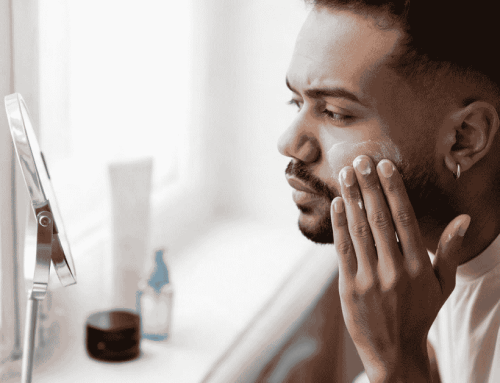
For face coverage, the standard recommendation is approximately a teaspoon (2.5ml) for face and neck combined. Most people use a fraction of this — enough to blend in quickly and not look white. This is especially relevant for Indian consumers, where cosmetic aesthetics (no white cast, quick absorption) have driven formulation trends that can compromise actual protection.
Additionally, sunscreen degrades with UV exposure. Reapplication every 2–3 hours of outdoor exposure is not optional — it is how the product is designed to work.
Physical vs Chemical Sunscreens: What’s Right for Indian Skin?
Physical (mineral) sunscreens contain zinc oxide and/or titanium dioxide. They sit on the skin’s surface and reflect UV radiation. They are immediately effective upon application, less likely to cause irritation, and are the first-line recommendation for sensitive skin, acne-prone skin, and melasma patients. The downside: older formulations leave a white cast on darker skin tones, though newer micronised and tinted formulations have largely addressed this.
Chemical sunscreens absorb UV radiation and convert it to heat. They are cosmetically elegant — invisible on skin, no white cast — but require 15–20 minutes to become effective after application, and some chemical filters (notably oxybenzone and octinoxate) can trigger irritation and hormonal concerns in sensitive individuals. Some evidence also suggests certain chemical filters can exacerbate pigmentation in individuals prone to it.
For most Indian skin concerns — particularly pigmentation, melasma, and post-procedure care — we recommend mineral sunscreens or hybrid formulations that combine both. If you are managing active melasma or are post-laser, do not use a chemical-only sunscreen without consulting your dermatologist.
Common Myths We Hear at the Clinic
“I use a moisturiser/foundation with SPF, that’s enough.”
It isn’t. SPF in makeup and moisturisers is included at concentrations that provide minimal real-world protection. These products are also not applied in quantities sufficient to achieve their stated SPF. Use a dedicated sunscreen underneath.
“I stay indoors most of the day, I don’t need sunscreen.”
UVA rays penetrate glass. If you sit near windows, your skin is receiving UVA exposure. Blue light from screens is an additional stressor. Sunscreen is not just for outdoor use.
“SPF 100 is twice as good as SPF 50.”
It is not. SPF 50 blocks ~98% of UVB. SPF 100 blocks ~99%. The marginal gain is trivial. Consistent application of SPF 30–50 PA++++ is significantly more effective than sporadic application of SPF 100.
What We Recommend at Dr. Nishita’s Clinic
The ideal sunscreen for most Indian skin types: SPF 30–50, PA++++, broad-spectrum, with either a mineral base or a hybrid formulation. For oily or acne-prone skin, look for non-comedogenic, gel-based, or fluid formulations. For dry or mature skin, a moisturising cream-based formula works well.
If you are undergoing any active skin treatment at our clinic — chemical peels, laser, microneedling, or any prescription topical — sunscreen is not optional. It is part of your treatment protocol. Skipping it undoes the treatment.
If you are unsure which sunscreen is right for your skin type and current concerns, this is something we address in every skin consultation. The right sunscreen for your skin, applied correctly, is the single highest-return investment in your long-term skin health.
Book a consultation at Dr. Nishita’s Clinic: +91 93812 18003
— Dr. Nishita Ranka | Consultant Dermatologist | Dr. Nishita’s Clinic for Skin, Hair & Aesthetics, Hyderabad