Few ingredients in dermatology have more evidence behind them than retinoids. Decades of clinical research have confirmed their efficacy for acne, pigmentation, fine lines, skin texture, and collagen stimulation. They are, by most measures, the most studied topical ingredient in the history of skincare. They are also, particularly for Indian skin types, one of the most frequently misused.
This post clarifies the difference between retinol and retinoids, explains what Indian skin specifically needs to know before starting either, and gives you a realistic framework for introducing them into your routine.
The Retinoid Family — Understanding the Hierarchy
Retinoids are a class of compounds derived from vitamin A. Within this class, there is a potency hierarchy that matters enormously in practice.
At the top: prescription retinoids — tretinoin (retinoic acid), adapalene (in higher concentrations), and tazarotene. These are biologically active: they bind directly to retinoid receptors in the skin and produce their effects immediately upon application. They are also the most likely to cause irritation, particularly in the early weeks of use.
Below them in potency: over-the-counter retinol. Retinol is not retinoic acid. It is a precursor that must be converted by the skin through two enzymatic steps before it becomes biologically active. This conversion reduces its potency significantly — retinol is estimated to be approximately 20 times less potent than tretinoin by the time it reaches its active form. This is why retinol causes less irritation: it is a weaker molecule in its active form, not a gentler version of the same molecule.
Further down: retinaldehyde (retinal), which requires only one conversion step and sits in potency between retinol and tretinoin. And at the bottom: retinyl esters (retinyl palmitate, retinyl acetate), which require multiple conversion steps and are the least potent — present in many mass-market products but producing minimal clinical effect.
What This Means for Indian Skin
Indian skin — Fitzpatrick types III–V — has a higher inflammatory response to irritants than lighter skin types. This is not a weakness; it is a physiological characteristic. What it means in practice is that aggressive retinoid introduction can trigger significant irritation, barrier disruption, and — critically — post-inflammatory hyperpigmentation. The very pigmentation problem many patients are trying to treat with retinoids can be worsened if the introduction phase is not managed carefully.
This is the central paradox of retinoids in Indian dermatology: the ingredient that best addresses hyperpigmentation and uneven skin tone can worsen both if used incorrectly. The answer is not to avoid retinoids — it is to introduce them intelligently.
How to Start — The Protocol We Use at Our Clinic
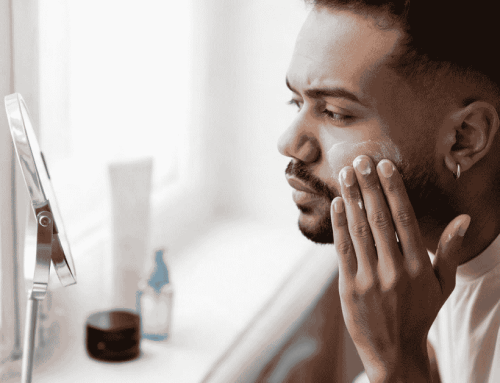
For patients new to retinoids, we almost always recommend starting with a low-concentration retinol (0.025–0.05%) applied once or twice a week, at night, on dry skin after moisturiser — a technique called buffering that reduces the rate of absorption and minimises initial irritation. The frequency is increased gradually over 8–12 weeks as the skin adapts.
Prescription tretinoin is reserved for patients with active acne or significant photodamage where a stronger response is clinically justified. When we prescribe it, we prescribe it with a specific protocol — not as a standalone instruction to “apply nightly” — because the purging phase and initial irritation need to be managed with concurrent skincare adjustments.
Non-negotiable alongside any retinoid: daily broad-spectrum SPF 30–50, PA++++. Retinoids increase photosensitivity. Using a retinoid without consistent sun protection is clinically counterproductive and can worsen the very pigmentation you are trying to address.
Common Mistakes We See
Starting at too high a concentration and applying nightly from day one — the most common mistake, and the one most likely to cause barrier damage and PIH. Using retinoids with other actives (AHAs, BHAs, vitamin C) without understanding the interactions — a combination that can cause significant irritation. Stopping retinoids the moment purging begins — purging (a temporary increase in breakouts as cell turnover accelerates) is expected and not a sign that the product is wrong for your skin. And using OTC retinol products marketed with inflated claims, containing retinyl esters at negligible concentrations, and expecting clinical results.
If you want to start a retinoid and are unsure which form, which concentration, and which protocol is appropriate for your skin type and concerns, this is precisely the conversation a skin consultation is designed to have.
Book a consultation at Dr. Nishita’s Clinic: wa.me/919381218003
— Dr. Nishita Ranka | Consultant Dermatologist | Dr. Nishita’s Clinic for Skin, Hair & Aesthetics, Hyderabad