Botox is simultaneously the most requested and most misunderstood aesthetic treatment we offer at our clinic. Patients come in asking for it without fully understanding what it does. Others avoid it entirely based on fears that have no basis in how the treatment actually works. This post is an attempt to give you the honest, clinical picture — without the hype in either direction.
What Botox Actually Is
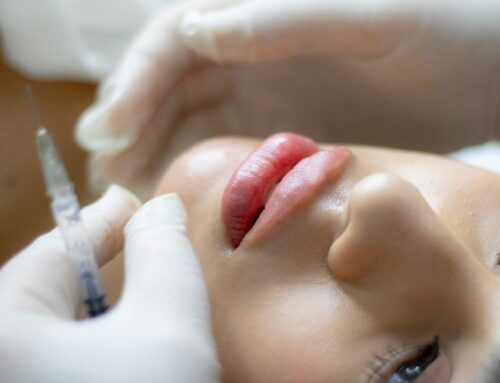
Botox is a brand name for botulinum toxin type A — a purified neurotoxic protein produced by the bacterium Clostridium botulinum. When injected in precise, controlled doses into specific muscles, it temporarily blocks the nerve signals that cause those muscles to contract. The result: the muscle relaxes, and the overlying skin — which was being repeatedly creased by that muscle’s movement — smooths out.
It is not a filler. It does not add volume. It does not freeze your entire face. When administered correctly by a trained dermatologist, it softens dynamic wrinkles — lines that form with expression — while preserving natural movement. The goal is never immobility. The goal is a rested, refreshed appearance that still looks like you.
What It Treats — and What It Doesn’t
Botulinum toxin is highly effective for dynamic wrinkles: forehead lines, frown lines between the brows (the “11s”), and crow’s feet around the eyes. These are wrinkles caused by repetitive muscle movement over years. Botox interrupts that movement and allows the skin to recover.
It does not treat static wrinkles — lines that are present even when your face is completely at rest. Those are caused by volume loss, collagen degradation, and gravitational changes, and they require different approaches: fillers, biostimulators, or resurfacing treatments depending on the severity.
Beyond wrinkles, botulinum toxin has several clinical applications we use regularly: jaw slimming (masseter reduction for a softer jawline), hyperhidrosis (excessive sweating of the underarms, palms, or feet), gummy smile correction, neck band treatment (the Nefertiti lift), and brow lifting. It is a genuinely versatile molecule when used by someone who understands facial anatomy.
How Long It Lasts and What to Expect
The effects of botulinum toxin are temporary. For most patients, results last between 3–6 months, after which the nerve signals gradually return and muscle activity resumes. With regular treatment over time, many patients find their results lasting longer — likely because the treated muscles weaken slightly with repeated relaxation.
Onset is not immediate. It takes 3–7 days for the initial effect to appear, and the full result is typically visible at 2 weeks. We always recommend a review at 2 weeks post-treatment to assess the result and make any minor adjustments if needed.
Side effects when administered by a qualified dermatologist are minimal and usually temporary: mild bruising or swelling at the injection site, a slight headache in the first 24 hours, or temporary heaviness. Drooping of the eyelid or brow — a complication frequently cited online — is rare and almost always the result of incorrect injection technique or placement. It is not a risk of the molecule itself.
Who Is a Good Candidate
The ideal candidate for botulinum toxin is someone with visible dynamic wrinkles who wants to soften their appearance without surgery. There is no fixed age — we see patients in their late 20s using it preventatively (a legitimate and evidence-supported approach) and patients in their 60s using it as part of a broader maintenance plan.
It is not appropriate during pregnancy or breastfeeding. Patients with certain neuromuscular conditions are not candidates. And patients who want a dramatic volumetric change — lifted cheeks, fuller lips, jaw definition — need a different conversation, because botulinum toxin is not the right tool for those goals.
The Indian Context — Why We See So Much Bad Botox
India has a significant problem with unqualified practitioners administering botulinum toxin in non-clinical settings — beauty salons, spas, and pop-up aesthetic clinics. The frozen foreheads, drooping brows, and artificially arched eyebrows that have given Botox its bad reputation are almost always the result of incorrect dosing and placement by someone without adequate anatomical training.
Botulinum toxin is a prescription medicine. In India, it should be administered only by a qualified dermatologist or plastic surgeon in a clinical setting. The difference between a natural result and a frozen one is almost entirely about the skill and knowledge of the person injecting — not the product itself.
At our clinic, every botulinum toxin treatment begins with a detailed facial assessment. We map the muscles, assess asymmetries, discuss your goals, and only then determine the dosing and placement. This is what separates a medical aesthetic treatment from a cosmetic one.
Book a consultation at Dr. Nishita’s Clinic: wa.me/919381218003
— Dr. Nishita Ranka | Consultant Dermatologist | Dr. Nishita’s Clinic for Skin, Hair & Aesthetics, Hyderabad