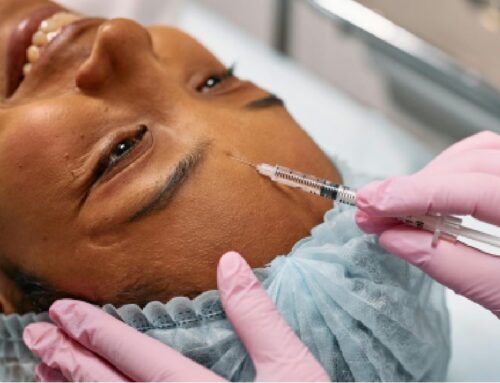
Lip fillers are one of the most requested aesthetic treatments at our clinic — and also one of the most anxiety-inducing for first-time patients. The fear is understandable. Social media is saturated with examples of overfilled, unnatural lips that bear no resemblance to a well-executed result. The reality of lip filler, when done correctly for the right patient, is far more subtle and far more flattering than those images suggest.
This is an honest guide to what the procedure actually involves, what Indian facial anatomy specifically requires, and how to tell whether your injector knows what they’re doing.
What Lip Fillers Are — and Aren’t
Lip fillers in clinical practice almost universally use hyaluronic acid (HA) — a naturally occurring substance in the body that attracts and retains water. HA fillers are temporary, lasting 6–12 months depending on the product used, the area injected, and the individual’s metabolism. They are also reversible: an enzyme called hyaluronidase can dissolve HA filler if a result is unsatisfactory or a complication arises.
Lip filler is not the same as lip implants, lip lifts, or permanent augmentation. It is an injectable treatment administered in a clinical setting, typically taking 20–30 minutes, with minimal downtime. Bruising and swelling in the first 48–72 hours is normal and expected — the final result is not visible until the swelling subsides, usually at 1–2 weeks post-treatment.
Indian Lip Anatomy — Why the “Instagram Lip” Doesn’t Work for Everyone
Indian facial anatomy is meaningfully different from the Caucasian facial proportions that dominate Western aesthetic medicine literature and social media. Indian lips are typically fuller to begin with, with a stronger vermillion border and greater natural volume. The aesthetic goals that work for thinner lips — dramatic augmentation, heavy cupid’s bow definition, maximum projection — do not translate well to Indian faces and frequently produce an unnatural, disproportionate result.
What works for Indian faces: subtle volume enhancement that respects the existing lip shape, hydration-focused treatment that improves texture and definition without dramatically increasing size, and attention to lip symmetry and proportion relative to the nose and chin. The goal is always to enhance what is already there — not to impose a different lip shape onto the face.
At our clinic, we have a detailed pre-treatment consultation for every lip filler patient where we discuss not just what they want, but what will actually look good on their specific face. Sometimes that conversation ends with us recommending less filler than the patient requested — or a different treatment altogether.
The Procedure — What to Expect
Lip filler treatment begins with a topical anaesthetic applied to the lips for 15–20 minutes. The filler is then injected using either a fine needle or a blunt-tip cannula — the choice depends on the specific technique and the area being treated. The procedure itself takes 15–20 minutes. Most patients find the discomfort manageable with topical anaesthesia, though the lips are a sensitive area and some degree of discomfort is normal.
Post-treatment, patients can expect swelling, tenderness, and sometimes bruising for 48–72 hours. Avoid strenuous exercise, alcohol, and excessive heat (saunas, hot showers) for 24 hours post-treatment. Avoid pressing or massaging the lips. The final result — once the swelling has fully settled — is typically visible at 10–14 days.
How to Spot an Injector Who Doesn’t Know What They’re Doing
This matters because the overwhelming majority of bad lip filler outcomes in India are the result of unqualified injectors, not bad products. Warning signs: the injector does not conduct a detailed facial assessment before treatment; they do not discuss your medical history or contraindications; they cannot tell you exactly what product they are using and at what volume; there is no discussion of the risk of complications or how they would manage them; the treatment is offered in a non-clinical setting.
Lip fillers involve injecting into a highly vascular area of the face. Vascular complications — while rare — can be serious. The injector must know how to recognise them and how to manage them. This requires medical training, not an aesthetics certificate.
Longevity and Maintenance
HA lip fillers typically last 6–9 months in the lips — a shorter duration than other facial areas because the lips are highly mobile. Some patients choose to maintain with a top-up treatment before the filler has fully degraded; others prefer to let it dissolve completely and reassess. Neither approach is wrong — it depends on your goals and preference.
With regular treatment over time, some patients find they need less product to maintain their result, as the cumulative effect of the filler provides a degree of lasting structural support.
If you are considering lip fillers and want an honest assessment of whether it’s right for your face and what result is realistic, that is exactly the kind of consultation we offer.
Book a consultation at Dr. Nishita’s Clinic: wa.me/919381218003
— Dr. Nishita Ranka | Consultant Dermatologist | Dr. Nishita’s Clinic for Skin, Hair & Aesthetics, Hyderabad