For a lot of us, ear piercing is more than a fashion choice: it’s a milestone, a tradition, a small but meaningful way of expressing style. Whether it’s a baby getting her first earrings, a teenager going for their first cartilage piercing, or an adult adding a new look, it’s one of the most common cosmetic procedures out there. It looks simple enough. But your skin doesn’t quite see it that way. A piercing is, technically, a wound. And like any wound, it needs the right conditions to heal well. Get it done somewhere unhygienic, or skip proper aftercare, and you’re looking at possible infections, allergic reactions, scarring, or a healing process that drags on far longer than it should The good news: almost all of that is avoidable with the right approach. With sterile technique and consistent aftercare, ear piercing is a genuinely low-risk procedure. Here’s what’s worth knowing before you go in.
It’s a Cosmetic Procedure, But Don’t Underestimate It
Most people think of ear piercing as something that takes a few seconds and barely counts as a “procedure.” Technically, that’s true. But it still involves creating an opening in the skin that needs real time to heal. Like any skin procedure, hygiene and precision matter more than convenience. A clean setup, sterile equipment, and someone trained to do it properly all reduce your risk of complications significantly. Put simply: the piercing takes minutes. Healing takes weeks.
Why Get It Done by a Dermatologist?
Medical ear piercing, done under a dermatologist’s supervision, has real advantages, especially if you have sensitive skin, known allergies, or a history of skin issues. A dermatologist brings:
- A properly sterile environment
- Correct technique for the specific piercing
- Guidance on which jewellery materials suit your skin
- Advice tailored to your skin type
- The ability to catch and manage complications early, if they come up
This matters just as much for parents getting a child’s ears pierced for the first time as it does for adults who’ve had bad reactions or infections before.
The Many Types of Ear Piercings
Ear piercing has expanded well beyond the earlobe. These days, people choose from a range of spots based on personal style: Earlobe: The classic, quickest to heal, and suitable for nearly everyone, including children. Helix: Upper outer cartilage; takes noticeably longer to heal than an earlobe piercing. Tragus: Through the small flap of cartilage near the ear canal. Conch: Inner cartilage, often chosen for a bolder, statement look. Cartilage piercings generally: Any cartilage piercing heals slower than an earlobe piercing, simply because cartilage gets less blood supply. 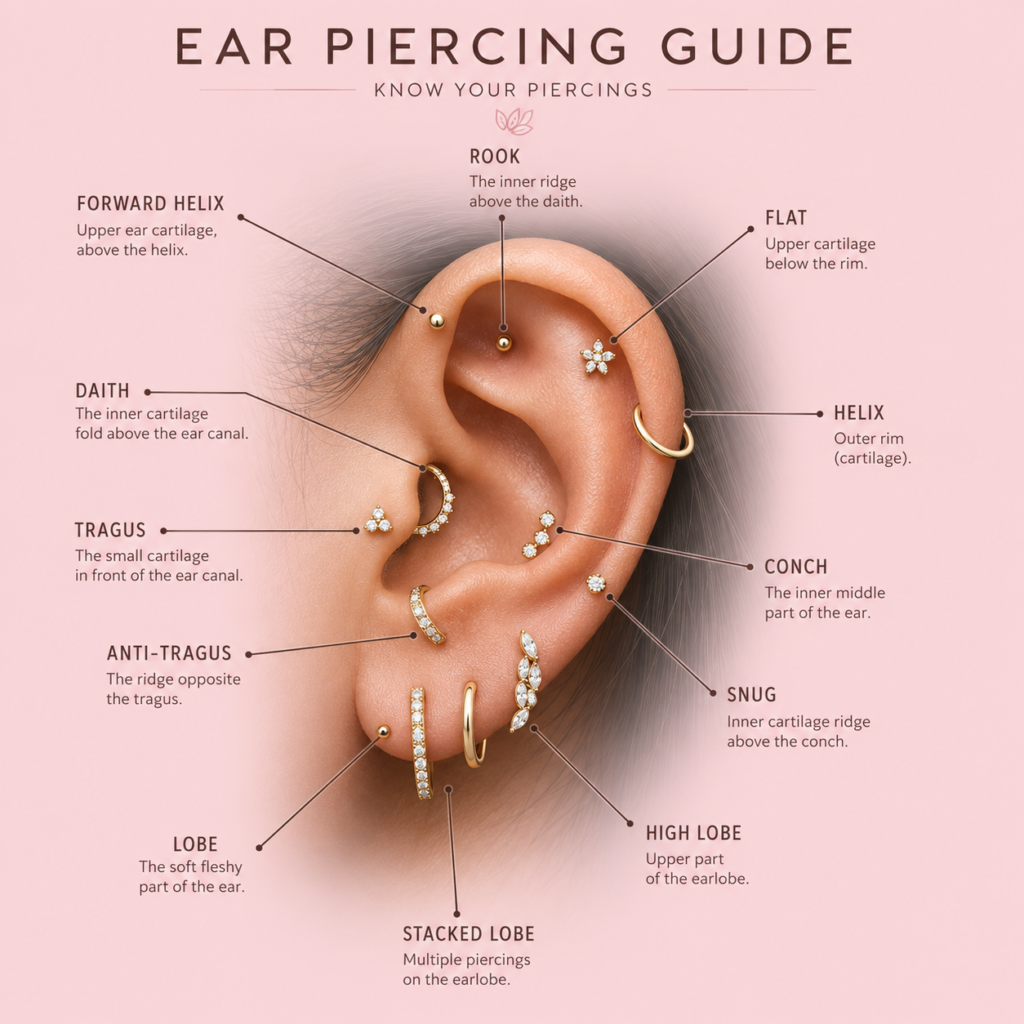 Whichever type you go for, proper aftercare is what actually determines how smoothly it heals.
Does It Hurt?
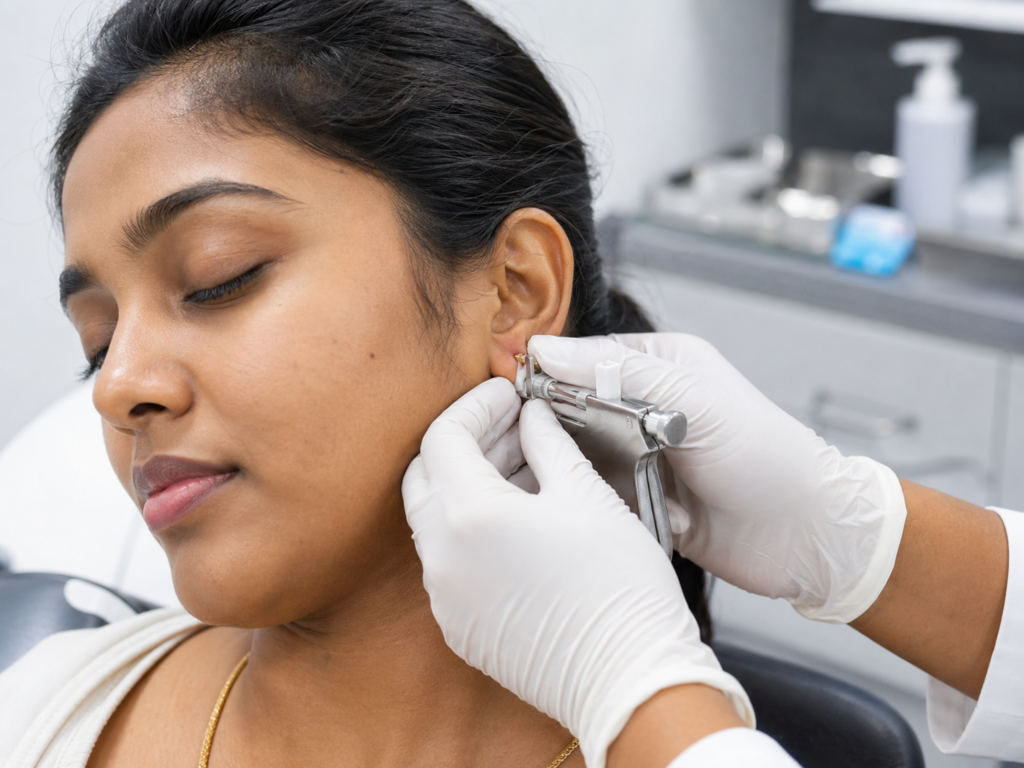 This is usually the first question people ask. For most people, it’s a quick pinch, over in seconds. How much it hurts depends on where you’re getting pierced, your own pain tolerance, and the technique used. Earlobes tend to be far less sensitive than cartilage. Some mild soreness or tenderness afterward, lasting a few days, is completely normal and just part of healing.
Getting Ready for Your Piercing
Preparation is simple, but a few things genuinely help:
- Pick a clinic that takes hygiene seriously: don’t compromise here for convenience
- Tell your dermatologist about any metal allergies, eczema, psoriasis, or history of keloid scarring
- Don’t get pierced if you currently have an infection near the area
- Eat something light beforehand so you don’t feel faint
- Tie back long hair to keep the area clean during the procedure
Choosing quality jewellery, surgical-grade titanium, medical-grade stainless steel, or gold, also cuts down your risk of irritation later.
Aftercare: The Part That Actually Determines Healing
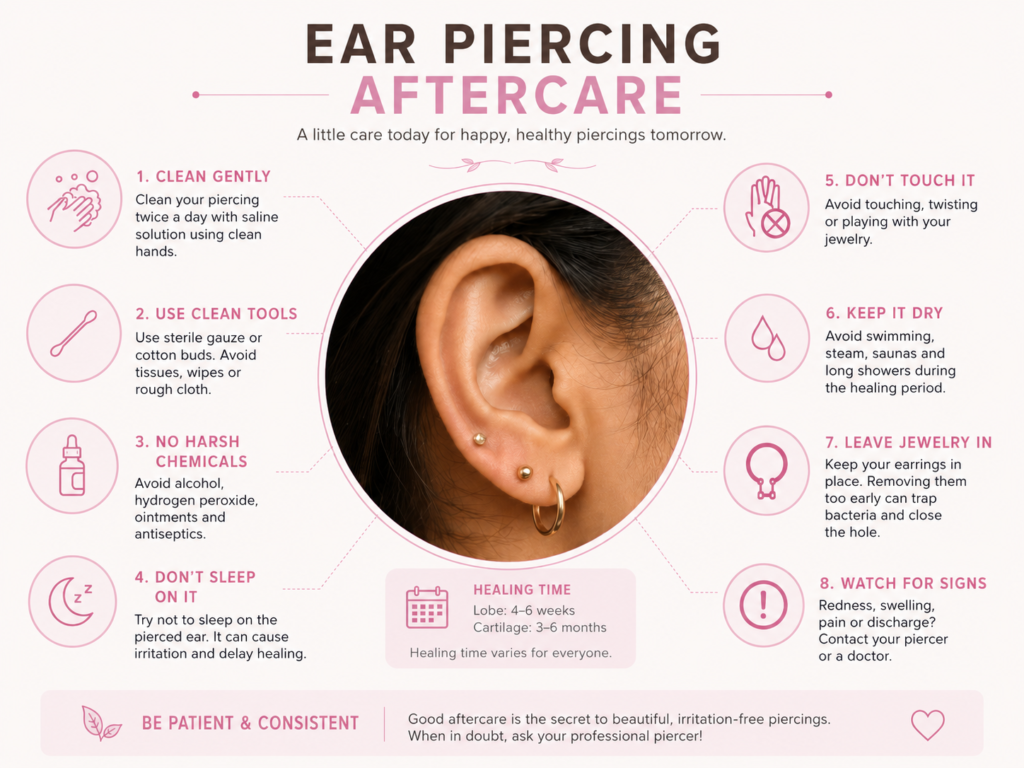 If there’s one thing that decides how well your piercing heals, it’s aftercare. A few non-negotiables:
- Wash your hands before touching the piercing, every time
- Clean it with whatever solution your dermatologist recommends
- Keep it dry after showering or bathing
- Leave the jewellery alone: no unnecessary twisting or touching
- Be mindful while sleeping to avoid pressure on the ear
- Skip pools, lakes, and hot tubs during early healing
- Don’t swap out the earrings before the recommended healing period is up
A little patience here goes a long way toward avoiding problems later.
How Long Does Healing Actually Take?
Healing time depends heavily on placement and how consistently you follow aftercare:
| Piercing Type | Average Healing Time |
| Earlobe | 6–8 weeks |
| Helix | 3–6 months |
| Tragus | 3–6 months |
| Conch | 6–9 months |
| Other cartilage | 6–12 months |
Just because it looks healed on the surface doesn’t mean the tissue underneath is fully settled. Resist the urge to change jewellery too early.
Normal Healing vs. Signs of Trouble
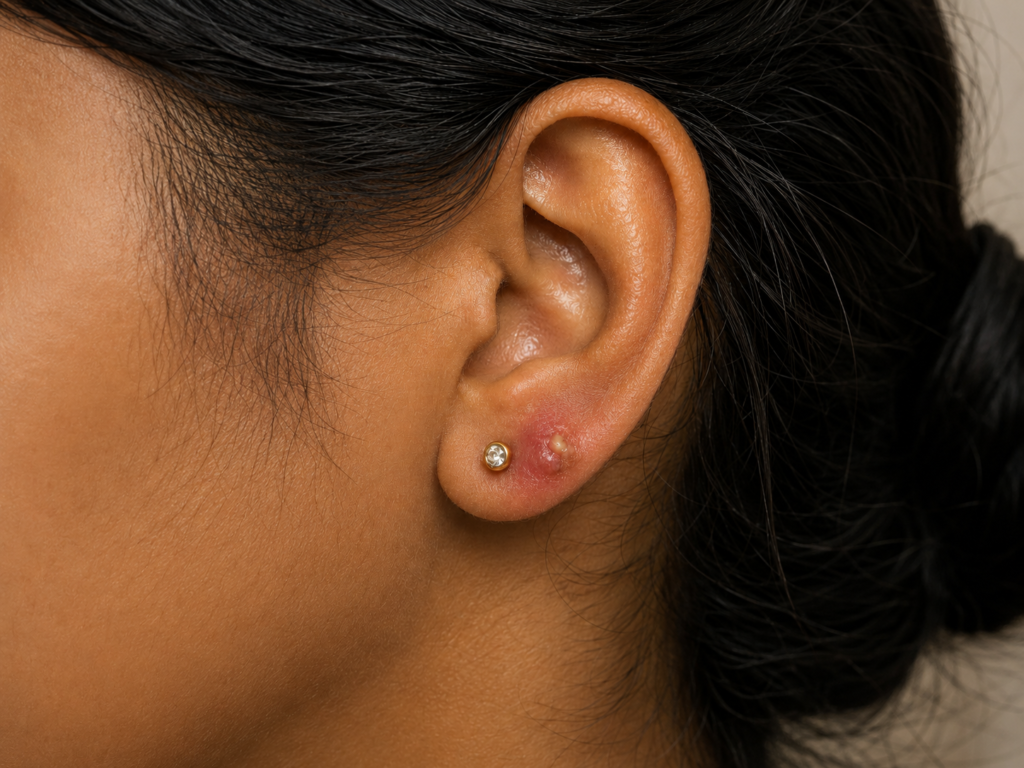 One can expect redness and tenderness in the first few days. Here’s how to tell the difference between normal healing and something worth a dermatologist visit:
| Normal Healing | Possible Infection |
| Mild redness | Redness that’s spreading or worsening |
| Slight tenderness | Severe pain |
| Swelling | Significant swelling |
| Clear or pale yellow fluid | Thick yellow or green discharge |
| Steady improvement | Symptoms getting worse over time |
| Mild warmth | Fever or feeling generally unwell |
If the pain persists, pus forms, there is major swelling, or fever develops, contact a dermatologist. Catching it early usually keeps a minor issue from turning into a real infection.
Common Mistakes People Make
More often than not, it’s not the piercing itself that causes problems. It’s what happens afterward. Watch out for:
- Touching the piercing with unwashed hands
- Taking earrings out too soon
- Constantly twisting the jewellery “to keep it moving”
- Sleeping directly on a fresh piercing
- Reaching for alcohol or hydrogen peroxide without your dermatologist’s go-ahead
- Ignoring redness or swelling that isn’t settling down
Gentle, consistent care almost always beats aggressive cleaning.
What About Kids?
Yes, children can safely get their ears pierced, provided it’s done under proper medical supervision with good hygiene practices. A few things parents should keep in mind:
- Stay consistent with aftercare
- Keep kids from touching or tugging at the earrings
- Watch for early signs of irritation or infection
- Pick age-appropriate, skin-friendly jewellery
A calm, reassuring environment during the procedure itself also makes a real difference for younger kids.
Who Should Be Extra Cautious?
Ear piercing is safe for most people, but it’s worth talking to a dermatologist first if you:
- Have a history of keloid scars
- Get frequent skin allergies
- Have eczema or psoriasis near the ears
- Have diabetes or a condition that affects healing
- Are prone to recurring skin infections
Your dermatologist can help you figure out whether piercing is a good idea for you and how to approach it safely.
When to See a Dermatologist
Don’t wait if you notice:
- Redness that keeps spreading past the first few days
- Persistent swelling or pain
- Thick yellow or green discharge
- Fever
- Jewellery that seems to be getting embedded in the skin
- Healing that’s clearly delayed despite doing everything right
Acting early usually resolves things before they escalate. Ear piercing might be a small procedure, but it deserves proper attention from start to finish. A hygienic setting, good aftercare, and a bit of patience are really what separate a smooth healing process from unnecessary complications. Whether it’s your first piercing or your fifth, healthy healing starts with informed choices. If you have sensitive skin, allergies, or any concerns going in, a dermatologist consult can make the whole experience safer and a lot more comfortable.
Frequently Asked Questions
Is a piercing gun or needle better?
Medical professionals often prefer sterile, single-use needles, especially for cartilage piercings, as they offer greater precision and may reduce tissue trauma.
How often should I clean my ear piercing?
Follow your dermatologist’s advice. Cleaning the area once or twice daily with the recommended solution is generally sufficient.
Can I wear gold earrings immediately?
Yes, provided they are of appropriate purity and suitable for newly pierced ears. Your dermatologist can recommend the most appropriate jewellery material.
Can I sleep on my new piercing?
It’s best to avoid sleeping directly on the pierced ear during the early healing period to reduce pressure and irritation.
When can I change my earrings?
Only after the recommended healing period has been completed. Changing earrings too early may disrupt healing and increase the risk of infection.
Book a consultation: wa.me/919381218003
— Dr. Nishita Ranka | Consultant Dermatologist | Dr. Nishita’s Clinic for Skin, Hair & Aesthetics, Hyderabad