You look in the mirror after a facial, a good skincare week, maybe even a new sunscreen routine. Your face looks even and fresh. Then your eyes drop to your neck, and there it is: a darker band, sometimes with a slightly rough, velvety feel. It looks like the two belong to different people.
If this sounds familiar, you are in very good company. A dark neck is one of the most common things people bring up in a dermatology clinic, and most of them have already tried a scrub, a lemon, a “neck whitening” cream, or all three. The real answer to “why is my neck darker than my face?” is rarely a single thing. It depends on what is causing it, and that matters, because the cause decides what will actually work.
This guide explains the common reasons for a dark neck, how to tell a harmless cause from one that needs a medical check, and what helps.
Why the Neck Gets Darker Than the Face
Your face gets plenty of attention. You cleanse it, moisturise it, and for many people, it gets sunscreen every morning. The neck often gets none of that. A few simple differences explain a lot:
- Less sunscreen. Most people stop applying sunscreen at the jawline. UV light darkens the neck over the years, and it does so quietly.
- More friction. Collars, chains, dupattas, scarves, helmet straps and even hair rubbing against the back of the neck can irritate skin again and again. Skin responds to repeated rubbing by making extra pigment.
- Folds and sweat. The neck has natural creases where sweat, oil and dead skin collect. Hyderabad’s heat and humidity make this worse.
- Thicker, rougher skin. When the skin on the neck thickens, it often looks darker too, because there is more pigment sitting in a thicker layer.
For many people, the cause is a mix of these. Sun, friction and poor exfoliation stack up slowly, and the colour difference becomes more noticeable each year.
The Causes You Should Know About
1. Sun exposure
UV rays trigger the skin to produce more melanin, the pigment that gives skin its colour. If your face is protected and your neck is not, the gap in colour grows. This kind of darkening is usually even, flat and smooth to touch.
2. Friction and rubbing
Tight collars, necklaces, and synthetic fabrics can cause a slow, low-level irritation. The skin responds by darkening. This often shows up in a pattern that matches where the rubbing happens, for example a band where a collar sits or a line under a chain.
3. Dead skin build-up and dryness
When dead cells collect in the neck creases, the skin can look dull and grey-brown rather than evenly toned. Dry, flaky skin also tends to look darker than well-moisturised skin.
4. Products and fragrance
Perfumes, certain deodorants, hair dyes and some skincare ingredients can irritate the skin or react with sunlight, leaving a darker patch behind. If your dark patch appeared in the same area where you spray perfume, that is worth noting.
5. Hormonal and skin-type factors
Hormonal shifts, pregnancy, and conditions such as PCOS can change pigment patterns. People with deeper skin tones also tend to show pigmentation more visibly, since their skin has more active pigment cells to begin with.
6. Acanthosis nigricans
This one deserves its own section, because it is the cause most people have never heard of, and the one most worth knowing about.
What Is Acanthosis Nigricans?
Acanthosis nigricans (often shortened to AN) is a skin change where certain areas turn darker and thicker. Instead of a flat patch of colour, the skin often looks and feels:
- Velvety or slightly raised
- Thicker than the skin around it
- Darker in a band across the back or sides of the neck
- Sometimes present in other folds too, such as the underarms, groin, knuckles or elbows
- Usually the same on both sides of the body
It does not wash off, and it does not respond well to scrubbing. In fact, scrubbing often makes it look worse, because it irritates the skin.
The important part is this: acanthosis nigricans is often a sign of something happening inside the body, not just on the skin. It is commonly linked with insulin resistance, which is when the body needs more insulin than normal to manage blood sugar. This is seen with weight gain, prediabetes, type 2 diabetes and PCOS. Some medicines can also play a part.
That does not mean everyone with a dark neck has a health problem. But if your neck is dark and velvety, and especially if it came on gradually along with weight gain, irregular periods or a family history of diabetes, it is worth getting checked. A simple blood test can tell you a lot.
How to Tell What Kind of Dark Neck You Have
This is not a substitute for a medical opinion, but these clues can help:
Likely sun or friction darkening
- Smooth and flat
- Matches areas exposed to sun or rubbed by clothing
- May improve over time with protection
Likely dead skin and dryness
- Dull, grey-brown, sometimes flaky
- Looks better right after exfoliation or moisturising
Possibly acanthosis nigricans
- Thick, velvety or slightly raised skin
- Appears on both sides of the neck, often the back and sides
- May appear in other body folds
- Slowly gets darker and thicker
- Skin tags may appear nearby
If your neck matches the last list, it is a good idea to see a dermatologist rather than keep trying products.
What Not to Do
Many people make their dark neck worse while trying to fix it. Please avoid:
- Lemon juice, baking soda and toothpaste. They irritate the skin and can leave it darker after the irritation settles.
- Scrubbing hard. Friction is one of the causes of the darkening, so more friction does not help.
- “Fairness” or bleaching creams. Some contain steroids or harsh ingredients that can thin the skin and cause long-term problems.
- Using strong peels or acids at home. Dark neck skin can react badly, especially in deeper skin tones.
What Actually Helps
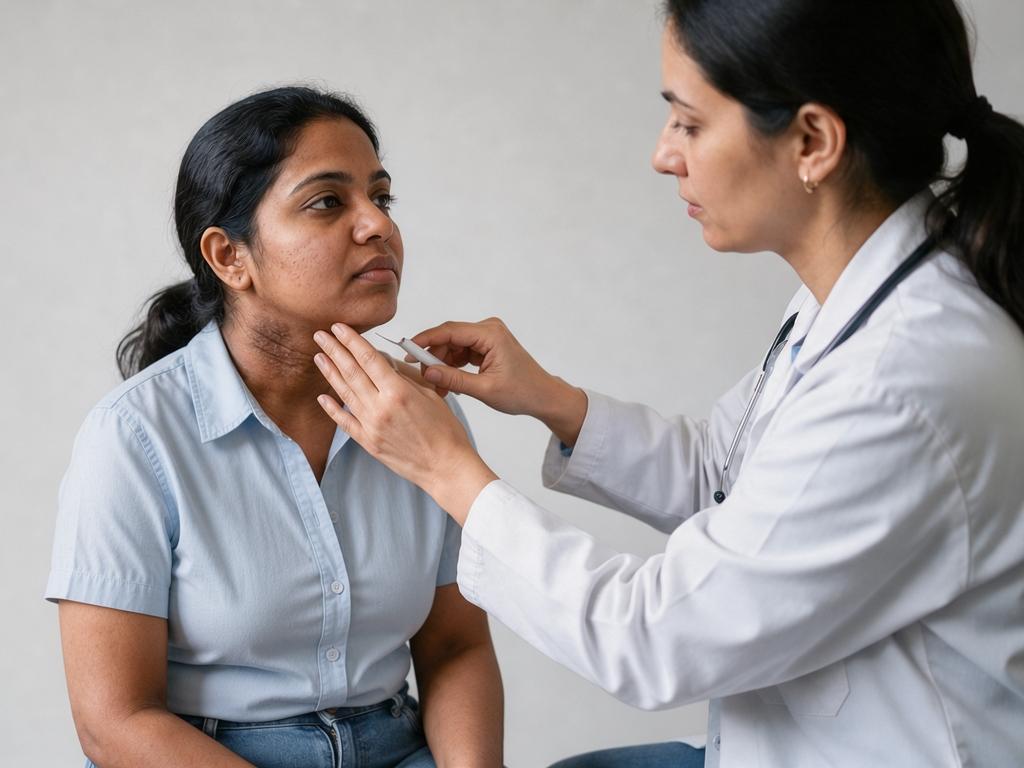
The right approach depends on the cause. A dermatologist will usually start by looking at the skin and asking about your health, medicines and family history.
Daily habits that help every type
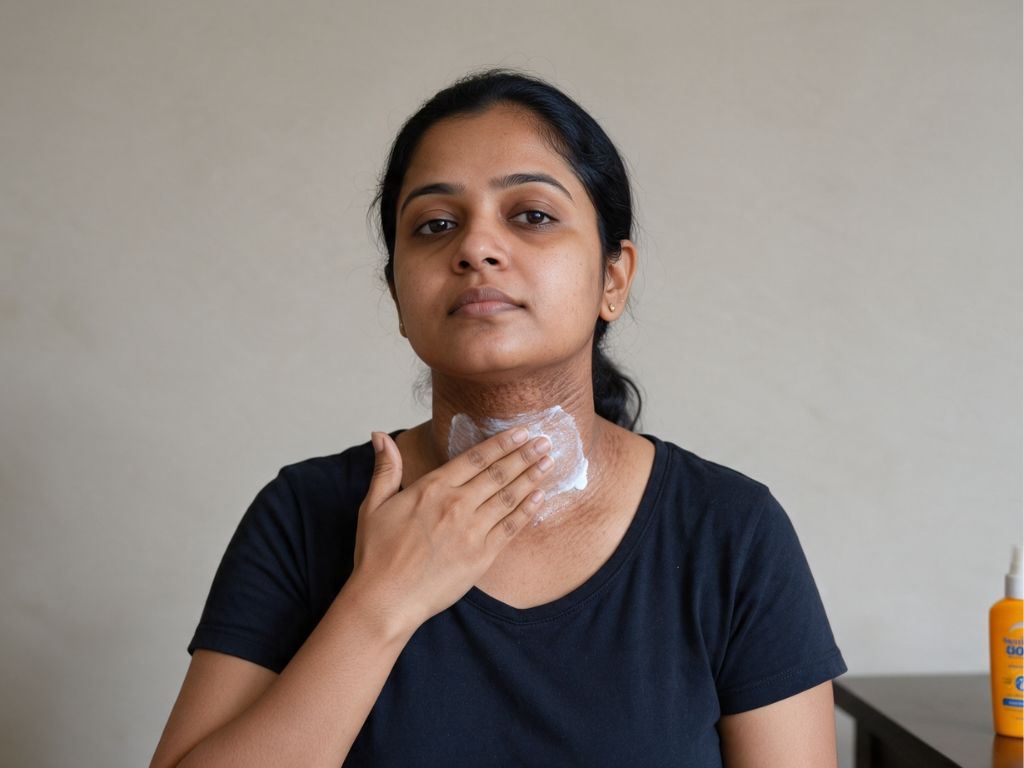
- Apply sunscreen to your neck every morning, front and back, as you do for your face.
- Moisturise after bathing. Dry skin looks darker and rougher.
- Reduce friction. Choose soft fabrics, and loosen collars and chains where you can.
- Clean the creases gently, and dry them well after bathing.
Treatments a dermatologist may suggest
- Prescription skincare. Ingredients such as azelaic acid, kojic acid, vitamin C, retinoids or tranexamic acid may be used, depending on your skin. These are chosen and adjusted by your doctor, because the wrong strength can irritate neck skin.
- Chemical peels. Gentle, dermatologist-supervised peels can help the skin shed built-up pigmented cells. The type and strength need to be matched to your skin tone.
- Laser treatments. For some types of pigmentation, laser toning may be considered. Settings must be calibrated carefully for Indian skin to avoid triggering more pigmentation.
- Medifacial-type treatments can help with surface dullness and texture, but they work best as part of a larger plan.
Results vary from person to person, and most pigmentation treatments need several sessions and consistent aftercare.
If it is acanthosis nigricans
Treating the neck alone often gives only partial improvement. The more useful step is looking at the cause. Your doctor may advise tests for blood sugar and insulin levels, and may talk with you about weight, diet, sleep, movement and hormones. When the underlying issue is managed, the skin often improves over time. Skin treatments can then be added to help the appearance, but they work better once the cause is addressed.
How Long Does It Take?
There is no fixed timeline. Darkening from sun and friction often improves over a few weeks to months with protection and a proper routine. Pigmentation that has been there for years usually takes longer. Acanthosis nigricans improves slowly and depends heavily on managing the cause.
Be wary of anyone promising overnight results or a guaranteed outcome. Skin simply does not work that way.
When to See a Dermatologist
Book a consultation if:
- Your neck is dark and feels thick or velvety
- The darkness is spreading or getting worse
- You notice similar changes in your underarms, groin or knuckles
- You have irregular periods, rapid weight gain or a family history of diabetes
- Home remedies have not helped after several weeks
- You are unsure what is causing it
A dermatologist at Dr. Nishita’s Clinic for Skin, Hair & Aesthetics in Banjara Hills, Hyderabad, can examine your skin, work out the likely cause, and suggest a plan that suits your skin type. Treatment is advised only after consultation, and results vary.
FAQs
Why is my neck darker than my face?
Usually because the neck gets less sunscreen and more friction than the face, and dead skin collects in its folds. In some people, a skin condition called acanthosis nigricans is the reason, which is often linked with insulin resistance.
Is a dark neck a sign of diabetes?
Not always. Most dark necks come from sun, friction or dead skin build-up. But a thick, velvety dark neck can be linked with insulin resistance, prediabetes or diabetes, so it is worth getting a blood test if you see these signs.
What is acanthosis nigricans?
It is a skin change in which areas such as the neck, underarms and groin turn darker and thicker with a velvety feel. It is commonly linked with insulin resistance and conditions such as PCOS.
How do I remove a dark neck at home?
Daily sunscreen on the neck, gentle cleansing, moisturiser and less friction are the safe basics. Avoid lemon, baking soda, harsh scrubs and bleaching creams, which often make things worse.
Can a dark neck be treated with a dermatologist?
Yes. Depending on the cause, a dermatologist may suggest prescription skincare, peels or laser treatment. Treatment is chosen after assessment, and results vary.
Will a dark neck go away on its own?
Mild darkening from sun or friction can fade when the trigger is removed. Longer-standing pigmentation or acanthosis nigricans usually needs proper assessment and treatment.
Is neck pigmentation treatment safe for Indian skin?
It can be, when the treatment and strength are matched to your skin tone by a dermatologist. Incorrect settings or products can darken skin further, which is why a doctor’s guidance matters.
Book a consultation: wa.me/919381218003
— Dr. Nishita Ranka | Consultant Dermatologist | Dr. Nishita’s Clinic for Skin, Hair & Aesthetics, Hyderabad
Explore More Articles: