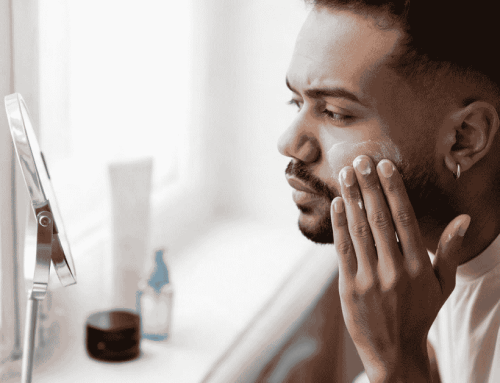
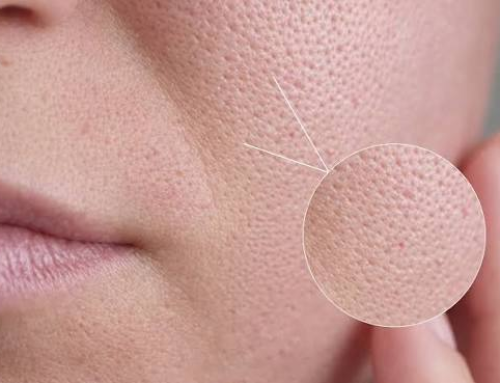
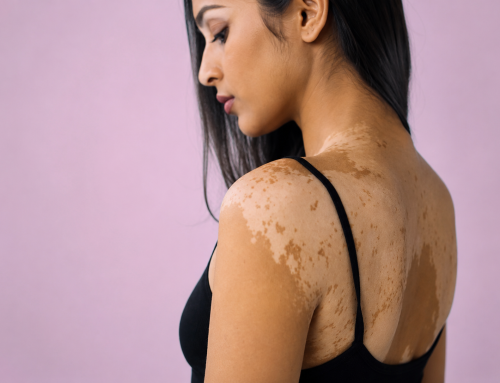
Most patients booking a wart or mole removal have already tried something at home first: an over-the-counter freezing kit, a wart-removal liquid from the pharmacy, or simply waiting to see if it goes away. Some of that works, some of it doesn’t, and the difference usually comes down to what the growth actually is, something a home kit can’t tell you but a dermatologist can within minutes. Warts and moles are two entirely different things that happen to get lumped together because both show up as a small, raised spot on the skin. Treating them well starts with knowing which one you’re actually dealing with.
Warts and Moles Aren’t the Same Thing
A wart is a viral infection caused by the human papillomavirus (HPV) entering the skin through a small break in its surface, which triggers rapid, localised skin cell growth. That’s why warts have a rough, textured surface and can spread to nearby skin or other people through direct contact. A mole, medically a nevus, is a cluster of pigment-producing cells that grow together instead of spreading evenly through the skin. Moles aren’t contagious or caused by any virus. Most people have somewhere between ten and forty of them, and the vast majority stay completely harmless for life. This distinction is why the two need different treatment approaches, and why a mole needs a level of evaluation a wart doesn’t: ruling out anything concerning before it’s removed.
Why Warts Need a Dermatologist, Not Just a Removal Kit
Over-the-counter salicylic acid works for some warts, particularly small ones on the hands, given enough time and consistent use. It falls short on warts that are larger, in awkward spots like around the nails or on the soles, or ones that have already spread. Because a wart is a viral infection, incomplete removal at home, whether through picking, cutting, or an under-treated acid application, can leave viral particles in the surrounding skin. That’s the common reason warts seem to “come back” in the same area after a home attempt. A dermatologist treats the entire affected zone, not just the visible bump, which is what actually reduces recurrence. Warts also spread more easily in warm, humid conditions and shared spaces like showers and pools, which makes persistent or spreading warts worth treating properly rather than waiting out.
Dermatologist Treatment Options for Warts
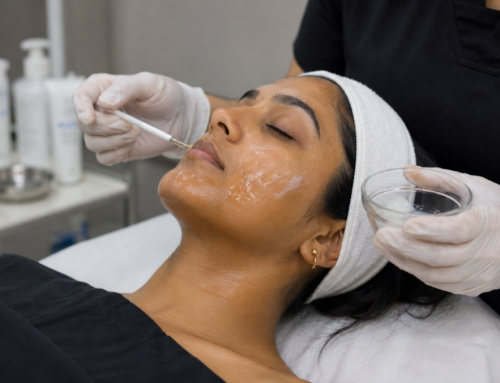
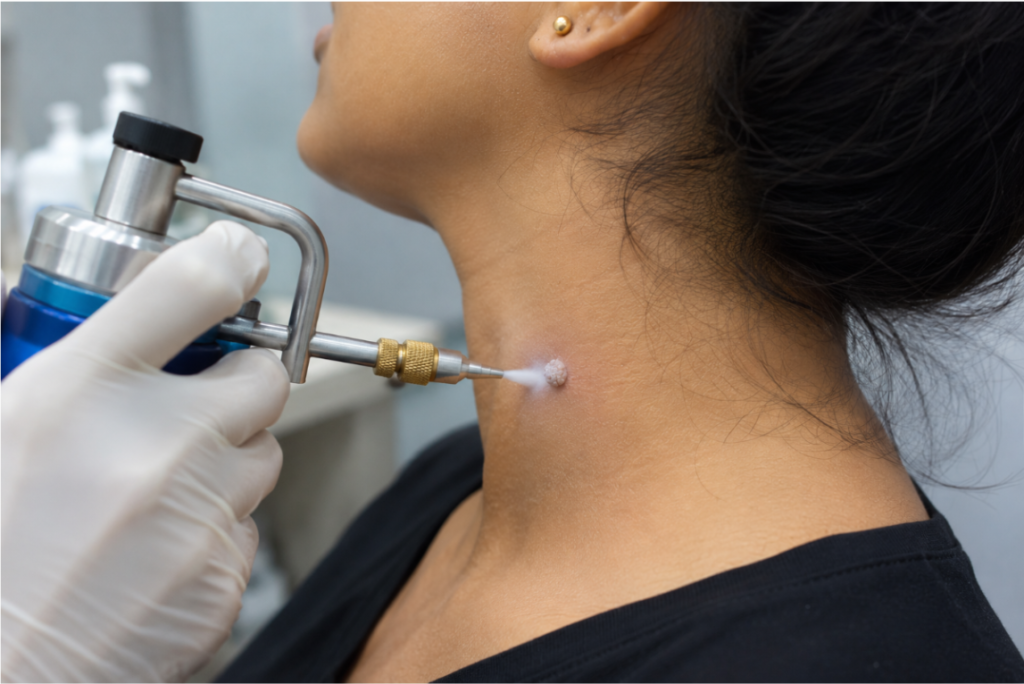 Cryotherapy freezes the wart tissue with liquid nitrogen, causing it to blister and shed over one to two weeks. It’s commonly used for warts on the hands and feet, though multiple sessions are often needed for full clearance. Electrocautery burns off wart tissue with a controlled electric current, useful for warts that haven’t responded to freezing or need more precise removal. Laser wart removal targets the blood vessels feeding the wart, cutting off its supply so the tissue dies and sheds. It’s especially suited to cosmetically sensitive areas like the face, offering more control and typically less scarring than cutting or burning. Chemical treatments using higher-strength salicylic or trichloroacetic acid, applied under supervision, work well for smaller or early-stage warts, particularly alongside periodic in-clinic follow-up. The right choice depends on the wart’s size, location, and how long it’s been there, which is why an actual diagnosis matters more than picking a method off a list.
Why Moles Need a Different Approach Entirely
Most moles never need to be touched. People choose removal for cosmetic reasons, because a mole catches on clothing, or because a dermatologist has flagged something worth a closer look. That last reason matters most. Before any mole is removed, a dermatologist checks it against the ABCDE signs that separate a routine mole from one needing further investigation:
- Asymmetry, one half looking different from the other
- Border irregularity, edges that are blurred or notched
- Colour variation within the same mole
- Diameter larger than about 6mm
- Evolving, any change in size, shape, colour, or sensation
A mole showing any of these isn’t necessarily a problem, but it needs a proper look, sometimes with dermoscopy, sometimes a biopsy, before removal rather than after. This is exactly why removing a mole at home or at a salon carries real risk: it skips the one step that actually protects you, checking what the mole is before it’s gone and can no longer be examined.
Dermatologist Treatment Options for Moles
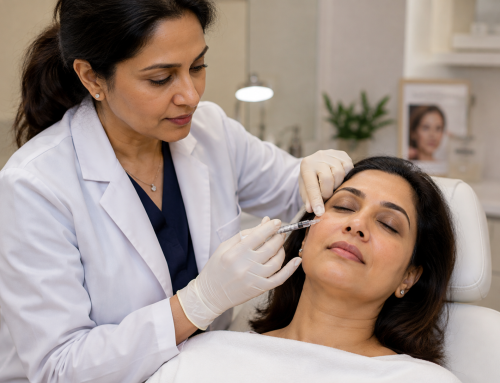
Shave excision removes a raised mole level with the surrounding skin using a fine blade, suited to moles sitting above the skin’s surface. Surgical excision removes the mole with a small margin of surrounding tissue, typically closed with sutures. This is the standard approach when a mole needs histopathological examination, meaning it’s checked under a microscope to confirm exactly what it is. Laser mole removal suits smaller, flatter, non-suspicious moles, particularly on visible areas like the face, leaving a more refined result than a blade. It isn’t suitable for larger or deeply pigmented moles, since the laser doesn’t reach that depth, and it’s never used on a mole that needs biopsy, since the tissue is destroyed rather than preserved for examination. Radiofrequency excision removes the mole precisely while sealing small blood vessels as it goes, usually meaning less bleeding and cleaner healing than a standard blade excision. A dermatologist chooses between these based on the mole’s size, depth, location, and whether biopsy is warranted, not on which method sounds least invasive.
Recovery and Aftercare
Wart removal typically brings some redness and a scab that sheds within one to two weeks, depending on the method. Mole removal recovery varies more: laser and radiofrequency methods usually heal within one to two weeks with minimal visible marking, while surgical excision needs suture care and a longer window, often four to six weeks, before the area fully settles. In both cases, sun protection over the healing area matters more than people expect. Freshly treated skin is more prone to pigmentation changes if exposed to direct sun before it’s fully healed, which is easy to prevent and harder to fix afterward.
When to See a Dermatologist
Any mole that’s changed in size, shape, or colour, or has started bleeding, itching, or feeling different to the touch, needs a dermatologist visit rather than a wait-and-watch approach. The same applies to any wart that’s spreading, painful, or hasn’t responded to a few weeks of at-home treatment. Removal itself should never happen without that evaluation first, whether the growth turns out to be entirely routine or not. What looks identical on the surface can be very different underneath, and that difference is exactly what a dermatologist is trained to catch.
FAQs
Are warts and moles the same thing?
No. Warts are caused by HPV and are contagious, while moles are clusters of pigment cells unrelated to any virus or infection. They need different evaluation and treatment approaches entirely.
Can I remove a wart or mole at home?
Warts can sometimes respond to over-the-counter salicylic acid in small, early cases, though incomplete treatment often leads to recurrence. Moles should never be removed at home, since doing so skips the evaluation needed to rule out anything concerning before the tissue is gone.
Is laser removal better than surgical removal?
Neither is universally better. Laser suits smaller, non-suspicious moles and cosmetically sensitive areas, while surgical excision is necessary when a mole needs biopsy or is larger and deeper. The right method depends on the specific growth.
How do I know if a mole needs to be checked rather than just removed?
Any mole showing asymmetry, irregular borders, colour variation, a diameter over 6mm, or recent change in appearance should be evaluated by a dermatologist before removal, ideally with dermoscopy or biopsy where warranted.
Why do warts keep coming back after I remove them myself?
Because a wart is a viral infection, incomplete removal, whether by cutting, picking, or under-treating with acid, can leave the virus in surrounding skin, letting the wart return in the same area. A dermatologist treats the full affected zone to reduce this risk.
Book a consultation: wa.me/919381218003
— Dr. Nishita Ranka | Consultant Dermatologist | Dr. Nishita’s Clinic for Skin, Hair & Aesthetics, Hyderabad
Explore More Articles: