Open Pores: Why They Happen and What Actually Reduces Them
Most patients who bring up open pores have already tried the standard fixes: ice cubes in the morning, a pore-minimising toner, maybe a clay mask once a week to “tighten” things up. None of it holds, which is usually what prompts the question of what actually works. That’s because all of these rest on the same assumption: that a pore is something that opens and closes, and that enough cold water or the right product will shut it. It won’t, because that isn’t how a pore works to begin with. Steam doesn’t open a pore. Cold water doesn’t close one. What changes is how visible it looks, and that comes down to a specific, identifiable set of factors, not a temperature trick.
What a Pore Actually Is
A pore is the visible opening of a hair follicle, and each one is connected to a sebaceous gland that produces sebum, your skin’s natural oil. Sebum isn’t a defect to manage away. It keeps the skin barrier intact and prevents the kind of dryness that causes its own set of problems. A pore looks larger when its opening stretches and the surrounding skin loses the structural support that normally keeps it tight. That’s a mechanical and biological change, not dirt sitting inside an “open” pore, which is also why aggressive cleansing or vigorous scrubbing does very little for pores that are already enlarged and can irritate the skin around them instead. It’s also worth being upfront that every face has visible pores. What looks like “poreless” skin online is almost always filtered or lit that way. The realistic goal isn’t erasing pores, since that isn’t physically possible. It’s keeping them controlled enough that they’re not the first thing you notice in the mirror.
Why Pores Enlarge: The Actual Mechanisms
Enlarged pores are rarely down to one cause. Usually it’s two or three of the following working together. Genetics. Pore size and skin type are inherited. If oily skin or visible pores run in your family, you’re working with the same baseline, which means the treatments that work well for you are the ones that manage that baseline rather than fight it. Excess sebum. When sebaceous glands overproduce oil, that oil mixes with dead skin cells inside the follicle and stretches the opening from within, over time. This is precisely why the T-zone, the nose, forehead, and chin, shows the most visible pores: sebaceous gland density is highest there. Collagen and elastin decline. These proteins form the structural scaffolding around each pore. As natural collagen production drops with age, that scaffolding weakens and the pore opening loses its ability to stay taut, which is why enlarged pores tend to become more obvious in the thirties and forties even on skin that looked fine a decade earlier. UV exposure. Sun damage isn’t limited to tanning and pigmentation. UV radiation breaks down existing collagen and elastin, accelerating the same structural loss that ageing causes on its own. This is one of the few causes on this list that’s almost entirely preventable with consistent sunscreen use. Acne and inflammation. Active breakouts stretch the pore wall from the inside, and repeated inflammation can damage the collagen surrounding the follicle. This is why pores connected to a history of acne often stay visibly enlarged long after the breakouts themselves have cleared, and why early acne treatment matters for texture, not just for active spots. Habits. Sleeping in makeup, over-exfoliating, skipping sunscreen, and using comedogenic products don’t create the underlying issue, but they keep making it worse. None of these need to be added to a routine. They need to be removed from one. Hormones. Androgen activity during puberty, pregnancy, or conditions like PCOS increases sebum output, which enlarges pores and raises the likelihood of blackheads and breakouts alongside them. A sudden shift in oiliness that doesn’t track with anything else in your routine is worth raising with a dermatologist. Climate. Sustained heat and humidity, which describes most of the year in Hyderabad, keep sebaceous glands more active than they would be in a cooler, drier climate, and airborne particulate matter common in Indian cities can settle into oilier skin more readily. This doesn’t mean pores are unavoidable here. It means a routine built for a temperate climate may need to run more consistently to hold up against local conditions.
Can Pores Be Closed Permanently?
No, and that’s not actually a problem. A pore is a structural feature that lets oil and sweat reach the surface as part of a functioning skin barrier, not a fault to eliminate. What you can genuinely do is reduce how stretched and visible it looks, through consistent skincare, sun protection, and, where needed, in-clinic treatment that supports collagen and regulates oil. The realistic target is refined texture, not the absence of pores. Chasing the second one is what leads people back to ice cubes and clay masks that never quite deliver. 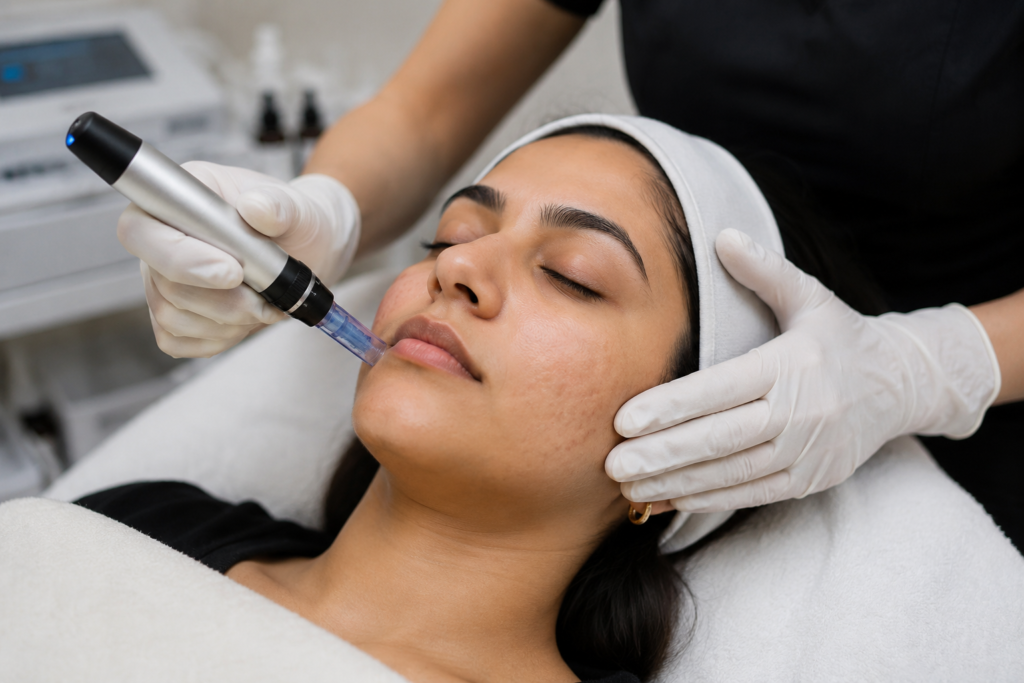
Treatments With Actual Evidence Behind Them
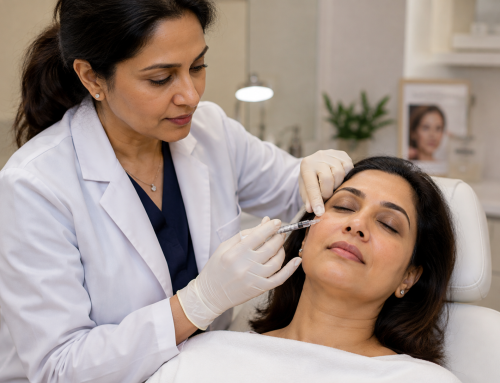
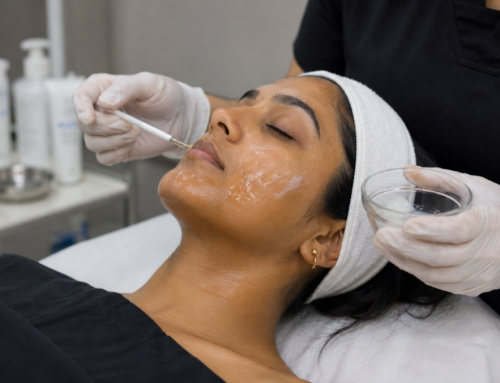
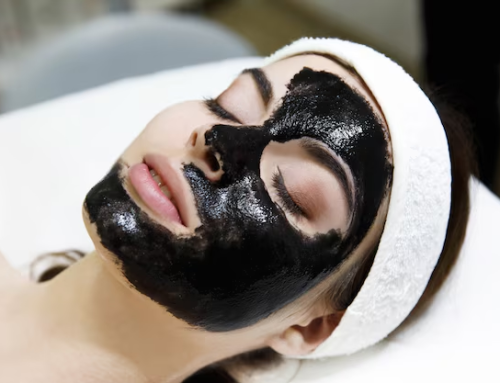
Topical retinoids (adapalene or prescription tretinoin) increase cell turnover and support collagen production, which is the closest thing to a direct fix for the structural loosening that makes pores look bigger. Improvement is gradual and needs consistent use across the skin’s full turnover cycle, generally several weeks before change is visible. Salicylic acid is oil-soluble, so it penetrates into the follicle itself rather than sitting on the surface, making it well suited to the oily, congested T-zone specifically rather than the whole face. Niacinamide regulates sebum output and supports the skin barrier over time. It’s a reasonable daily layer alongside a retinoid or salicylic acid, not a standalone fix on its own. Chemical peels exfoliate the outer skin layer with targeted acids, speeding up turnover and improving overall texture. These work well for oily skin, mild acne, and early textural changes, with the specific formulation depending on your skin. Carbon peel combines a medical-grade carbon lotion with laser energy to lift oil and debris out of the follicle while the laser’s thermal effect stimulates collagen. It reduces oil, softens the look of enlarged pores, and comes with minimal downtime, which is why it’s a popular option for people who don’t want to disrupt their week. Microneedling is typically recommended when enlarged pores show up alongside acne scarring or uneven texture. Controlled micro-injuries trigger the skin’s own healing response, building new collagen gradually across several sessions rather than in one visit. Fractional lasers create microscopic treatment zones that stimulate collagen remodelling while leaving surrounding skin intact for faster healing, useful for pores, scarring, sun damage, and fine lines together. These should always be performed under a dermatologist’s supervision given how customised the settings need to be. Prescription skincare doesn’t always mean a procedure. A dermatologist-designed routine built around oil regulation and collagen support can meaningfully change texture over several weeks of consistent use, without a single in-clinic visit.
What Outcomes to Actually Expect, and When
Visible change tracks the skin’s own turnover cycle rather than happening instantly. Most people using a retinoid or salicylic acid consistently start noticing refined texture by six to eight weeks, with fuller improvement by around three months. In-clinic treatments like carbon peel or chemical peels can deliver a noticeably brighter, smoother look right after a single session, but the deeper structural improvement, tighter-looking pores and better texture, builds across a series of sessions. A single session refreshes. It doesn’t replace an ongoing routine that keeps oil and collagen support consistent between visits.
Daily Habits That Quietly Undo Progress
- Picking at blackheads or squeezing pimples, which stretches the pore wall further and raises scarring risk
- Over-exfoliating, which weakens the skin barrier and can push oil production up as the skin overcorrects
- Sleeping with makeup on, letting oil and product sit in the follicle overnight
- Skipping sunscreen, which accelerates the collagen breakdown driving enlarged pores in the first place
- Using heavy or comedogenic products that clog the follicle from the start
None of the popular home remedies change this picture. Ice cubes, lemon juice, toothpaste, and baking soda might create a brief tightening sensation, but none of them shrink a pore in any lasting way, and lemon juice and baking soda specifically can irritate the skin and damage the barrier with repeated use.
A Routine Worth Sticking To
- Cleanse twice daily with something suited to your skin type
- Remove makeup fully before bed
- Use non-comedogenic skincare and sunscreen
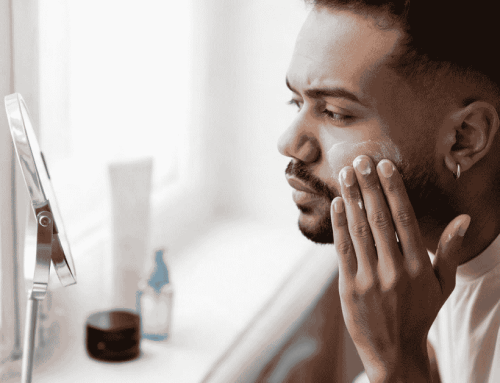
- Add niacinamide or salicylic acid if your skin tolerates it
- Wear broad-spectrum sunscreen every day, without exception
- Leave blackheads and pimples alone rather than squeezing them
- See a dermatologist if enlarged pores are paired with acne, scarring, or persistent oiliness
A simple routine followed daily will outperform an elaborate one abandoned after two weeks. Consistency is doing most of the work here, not the number of products involved.
When to See a Dermatologist
Enlarged pores that persist despite a consistent routine, or that show up alongside frequent breakouts, scarring, or oiliness that doesn’t respond to anything you’ve tried, are worth a professional evaluation rather than another round of trial and error. A dermatologist can identify what’s actually driving the concern and build a plan around it, whether that’s a topical routine, a chemical peel, carbon peel, microneedling, or a combination suited to your skin specifically. It’s especially worth booking a consultation if over-the-counter products haven’t helped after several weeks, if you’re not sure which ingredients your skin can tolerate, or if you’re considering an in-clinic treatment and want to know which one actually fits your skin rather than guessing from what’s trending.
Frequently Asked Questions
Can open pores be permanently closed?
No. Pores are a natural part of your skin and cannot be permanently closed. However, the right skincare and dermatologist-recommended treatments can significantly reduce their appearance .
Which treatment is best for open pores?
There isn’t a single treatment that’s best for everyone. Depending on your skin type and concerns, your dermatologist may recommend Chemical Peels, Carbon Peel, Microneedling, laser treatments, or medical skincare.
Does oily skin cause enlarged pores?
Yes. Excess oil can stretch the pore opening over time, making pores appear larger and more noticeable.
Can ice shrink pores?
Ice may temporarily make your skin feel firmer, but it does not permanently reduce pore size.
Is Carbon Peel good for enlarged pores?
Carbon Peel can be an effective treatment for oily skin, enlarged pores, and mild acne. It helps cleanse the pores, regulate oil production, and improve overall skin texture.
Can skincare products remove open pores?
No skincare product can remove pores. However, ingredients such as niacinamide, salicylic acid, and retinoids can improve skin texture and reduce the appearance of enlarged pores over time.
How long does it take to see results?
This depends on your skin type and the treatment used. Some professional treatments offer visible improvements within a few sessions, while skincare products usually require consistent use over several weeks.