Most people dealing with a dark neck have already scrubbed it, exfoliated it, and tried at least one lemon-and-turmeric combination they found online before asking what actually works. The frustrating part is that none of it holds, because in most cases, darkening around the neck isn’t sitting on the surface waiting to be scrubbed off. It’s a change happening deeper in the skin, and scrubbing harder usually just irritates it further without touching the actual cause.
Before getting into treatment, it’s worth understanding what’s actually causing it, because the right approach depends entirely on that.
What Actually Causes a Dark Neck
Friction and rubbing from tight collars, scarves, or jewellery worn repeatedly in the same spot can darken skin over time, since repeated friction triggers extra pigment production as a protective response.
Dead skin buildup and poor exfoliation can make the neck look duller and darker than surrounding skin, especially in skin folds where cells don’t shed as easily as they do on flatter areas.
Sun exposure affects the neck just as much as the face, and it’s an area people often forget to apply sunscreen to, which leads to gradual, sun-related darkening over the years.
Certain skincare or grooming products, including some perfumes and deodorants used near the neck, can cause a mild irritant reaction that leaves behind darkening.
Acanthosis nigricans is the one that genuinely matters most to identify correctly, because it isn’t just pigmentation. It’s a specific skin change, thickened, velvety, darkened patches, usually symmetrical, most common at the back and sides of the neck, that’s strongly linked to insulin resistance. It shows up frequently in people who are overweight, have prediabetes or type 2 diabetes, or have conditions like PCOS that affect insulin levels. This is the version of “black neck” that no scrub or cream will meaningfully fix, because the root cause isn’t in the skin, it’s metabolic.
How to Tell the Difference
Simple friction or sun-related darkening usually looks flat and smooth, similar in texture to the surrounding skin, just a shade or two darker. Acanthosis nigricans looks and feels distinctly different: the skin is thickened and has a velvety, almost leathery texture you can actually feel change under your fingers, not just see. It’s also typically symmetrical on both sides of the neck and can appear alongside similar patches in the armpits or groin.
If your dark neck has that thicker, velvety texture rather than just being a flat darker tone, that’s the strongest sign it’s worth a proper evaluation rather than a new cream.

Do Home Remedies Actually Work?
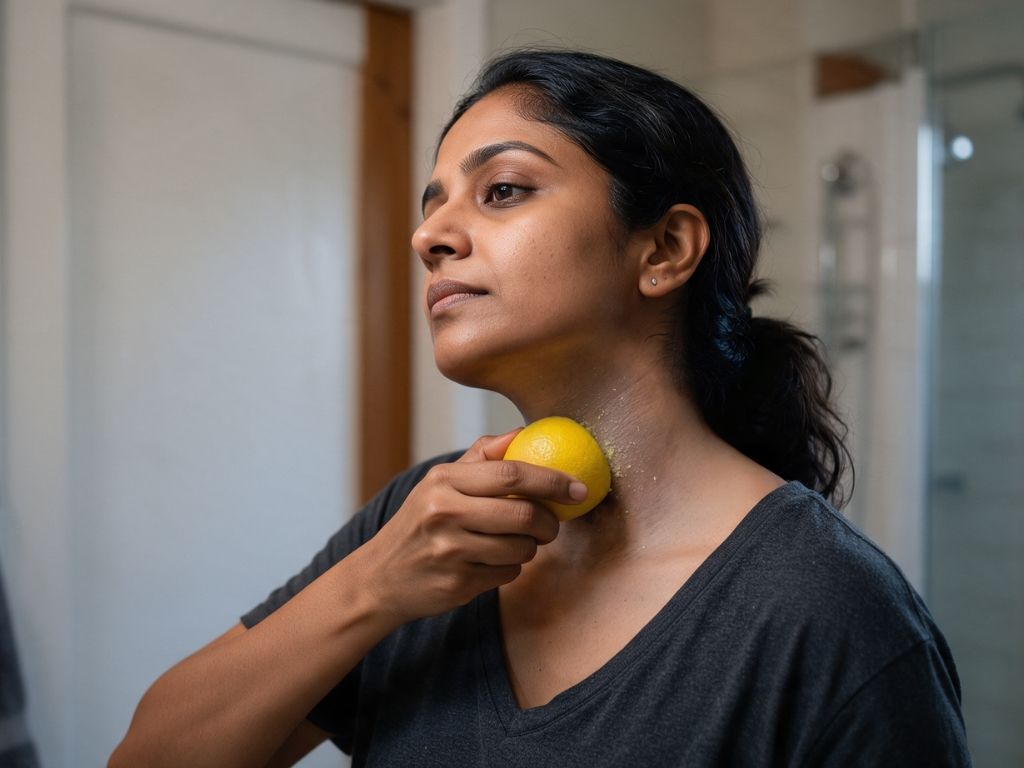
For darkening caused by friction, sun exposure, or dead skin buildup, gentle exfoliation and consistent sun protection can genuinely help over time, since the cause is largely surface-level in these cases. Common home remedies like lemon juice, baking soda, or harsh scrubs are a different story. They can create a brief lightening effect through irritation and aggressive exfoliation, but they don’t address the underlying cause, and lemon juice specifically increases sun sensitivity, which can make pigmentation worse rather than better if the treated area is then exposed to sunlight.
For acanthosis nigricans specifically, no home remedy addresses the actual driver, since the darkening is a downstream effect of insulin resistance, not a surface pigmentation issue. Treating the skin without addressing the underlying metabolic factor tends to bring the darkening right back, however consistently you exfoliate.
What Actually Helps
For friction, sun, and dead-skin-related darkening:
- Gentle exfoliation once or twice a week, avoiding harsh scrubbing that irritates the skin further
- Consistent sunscreen application on the neck, not just the face
- Loose-fitting collars and reduced friction from jewellery or scarves where possible
- Ingredients like niacinamide or a gentle vitamin C can help even out tone over consistent use
For acanthosis nigricans:
- Addressing the underlying insulin resistance is the actual treatment, which usually means working with a doctor on blood sugar management, weight, and any related hormonal factors
- Topical treatments like retinoids or exfoliating acids can improve the skin’s texture and appearance alongside addressing the root cause, but rarely resolve it as a standalone fix
- In-clinic treatments such as chemical peels can help improve texture and tone once the underlying driver is being managed, not as a replacement for that management
Why Treating Only the Skin Often Doesn’t Work
This is the part that trips people up most. If neck darkening is due to acanthosis nigricans and someone treats it purely as a cosmetic pigmentation issue, whether with creams, peels, or lasers, the results are usually temporary or disappointing, because the treatment isn’t addressing why the skin is behaving this way in the first place. That’s not a reason to avoid skin treatments altogether, they can genuinely help improve texture and appearance, but they work best as part of a plan that also addresses the underlying cause, not instead of one.
When to See a Dermatologist
If your neck darkening has a thickened, velvety texture rather than a flat darker tone, or if you notice similar patches in your armpits or groin, it’s worth seeing a dermatologist rather than continuing with over-the-counter products. This is also a reasonable moment to check in with a physician about blood sugar and metabolic health, since acanthosis nigricans is often the skin flagging something worth investigating elsewhere in the body. Even for non-acanthosis darkening, if it isn’t improving after a few months of consistent gentle care and sun protection, a dermatologist can identify what’s actually going on and recommend a more targeted treatment.
FAQs
What’s the fastest way to get rid of a dark neck?
It depends entirely on the cause. Friction or sun-related darkening can improve with consistent gentle exfoliation and sunscreen over several weeks. If the darkening is due to acanthosis nigricans, there’s no fast fix, since it requires addressing the underlying insulin resistance alongside any skin treatment.
Do lemon juice and baking soda actually lighten a dark neck?
They may create a brief, superficial lightening effect through irritation, but they don’t address the underlying cause and can irritate the skin. Lemon juice also increases sun sensitivity, which can worsen pigmentation if the area is exposed to sunlight afterward.
How do I know if my dark neck is acanthosis nigricans?
The key sign is texture. Acanthosis nigricans feels thickened and velvety, not just flat and darker, and is usually symmetrical on both sides of the neck. It’s often linked to insulin resistance and may appear alongside similar patches in the armpits or groin.
Is acanthosis nigricans dangerous?
The skin change itself isn’t harmful, but it’s frequently a marker of an underlying condition like insulin resistance, prediabetes, or PCOS, which is worth having properly evaluated rather than ignored.
Can skincare products alone fix acanthosis nigricans?
Not on their own. Topical treatments can improve the skin’s texture and appearance, but lasting results usually require addressing the underlying metabolic cause alongside any skin-focused treatment.
When should I see a doctor about neck darkening?
See a dermatologist if the darkening has a thickened, velvety texture, doesn’t improve after a few months of consistent care, or appears alongside similar patches elsewhere on the body. It’s also worth checking blood sugar and metabolic health with a physician if acanthosis nigricans is suspected.
Book a consultation: wa.me/919381218003
— Dr. Nishita Ranka | Consultant Dermatologist | Dr. Nishita’s Clinic for Skin, Hair & Aesthetics, Hyderabad
Explore More Articles: