A tattoo that felt right at 19 can feel very different at 29. Maybe the design has faded, the name belongs to someone from the past, the placement no longer suits your job, or you simply want your skin back.
Whatever the reason, laser tattoo removal is the most widely used way to fade or remove a tattoo. It is also one of the most misunderstood. People expect a single session, a clean slate and a bill they can predict. The reality is more gradual, and a lot depends on the tattoo itself.
This guide covers how it works, how many sessions to expect, what the treatment feels like, recovery, risks, and what shapes the cost.
How laser tattoo removal works
Tattoo ink sits in the dermis, the layer of skin below the surface. The body treats the ink as foreign, and your immune cells try to clear it but cannot, which is why the tattoo stays.
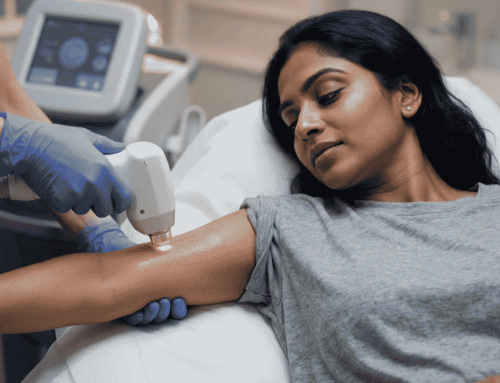
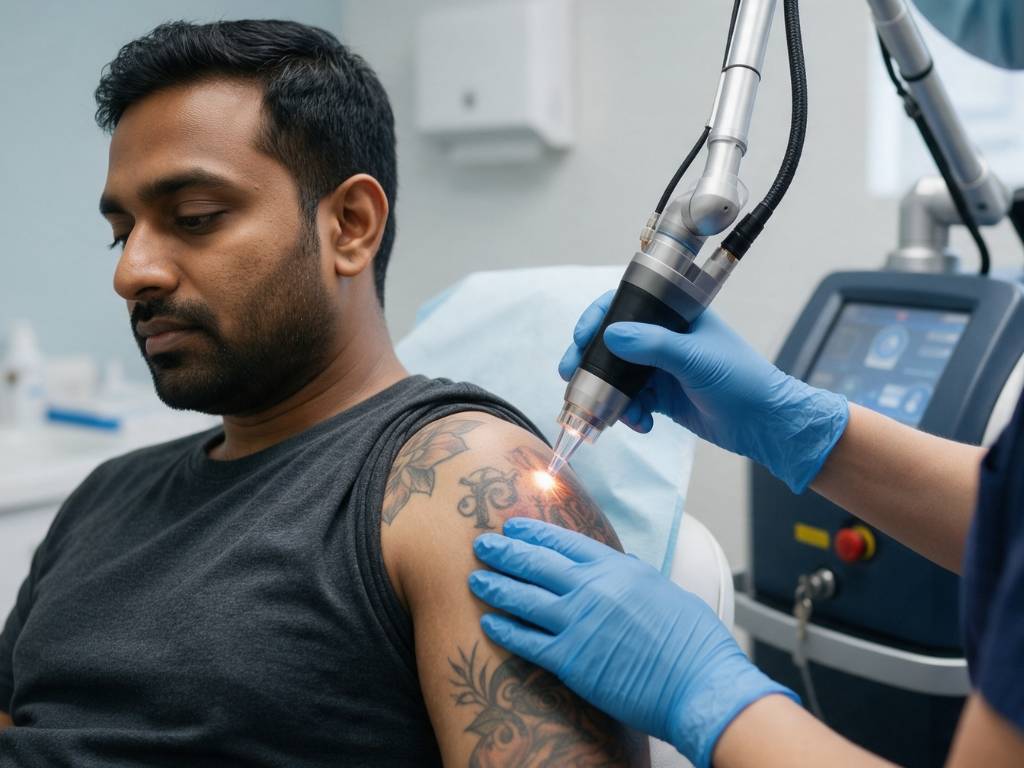
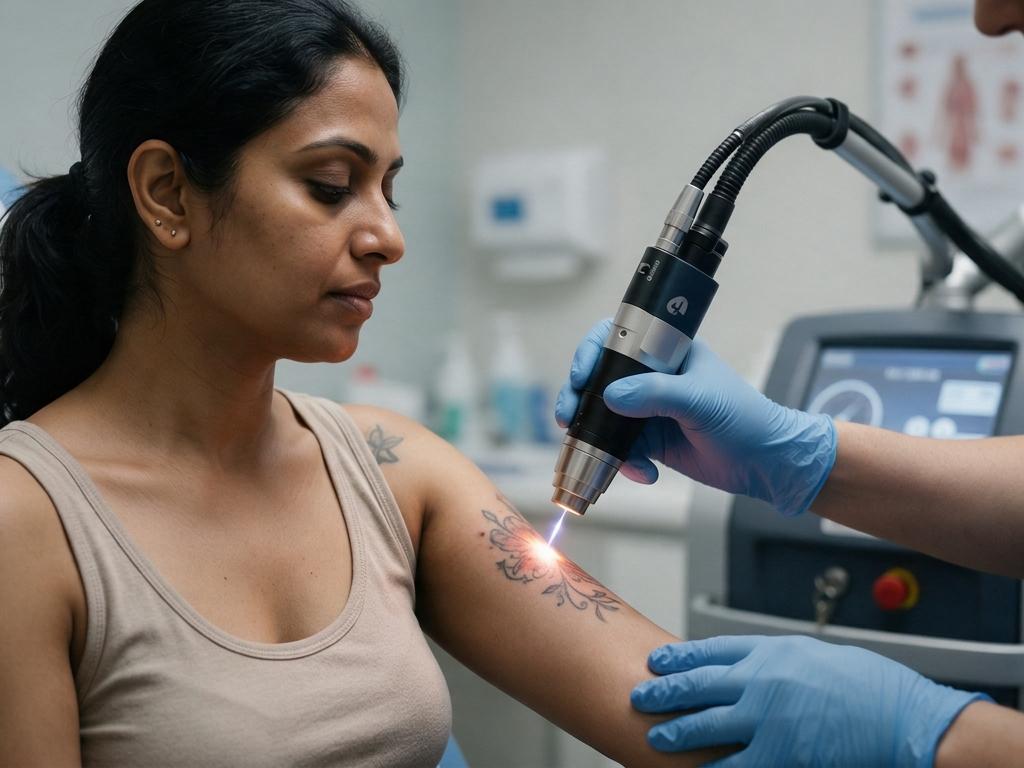
A tattoo removal laser sends very short pulses of light energy into the skin. The ink particles absorb that energy and break into much smaller fragments. Over the following weeks, your body’s immune system clears these fragments gradually, and the tattoo fades.
Two types of laser are commonly used:
- Q-switched lasers (such as Nd:YAG), which deliver short, powerful pulses
- Picosecond lasers, which deliver even shorter pulses and may break ink into finer particles
Different wavelengths target different colours, which is why some clinics use more than one setting or device. Which one suits you depends on your tattoo and your skin, and a doctor can advise.
Will the tattoo go away completely?
It may fade a lot, and for some tattoos it can clear almost entirely. But it is not something a clinic can guarantee. Some tattoos leave a faint shadow, a “ghost” of the design, or a slight change in skin texture or colour. Colour, ink depth, your skin tone and your immune response all play a part.
Be careful with any promise of full removal in a set number of sessions.
How many sessions will you need?
Tattoo removal is almost always a series. Sessions are spaced weeks apart, usually around six to eight weeks, to give your skin time to heal and your body time to clear ink between treatments. Going back sooner does not speed things up and raises the risk of skin damage.
The number of sessions depends on several things.
1. Ink colour
This is a major one.
| Ink colour | How it generally responds |
| Black | Absorbs most laser wavelengths, so usually responds best |
| Dark blue, dark green | Often respond reasonably well with the right laser |
| Red, orange | May need a specific wavelength |
| Light green, turquoise, yellow | Can be harder to clear |
| White, flesh-toned or pastel | Can be difficult, and some may darken |
2. Size and density
A small, light design takes fewer sessions than a large, dense one with heavy colour packing.
3. How old the tattoo is
Older tattoos have often faded and may clear faster than recent ones, because some ink has already been broken down over time.
4. Depth of ink
Professional tattoos usually place ink deeper and more evenly than amateur ones. Amateur tattoos can be patchy, and sometimes respond faster, but not always.
5. Location on the body
Tattoos closer to the heart, such as on the chest, ribs or upper back, tend to fade faster because of better circulation. Those on the hands, feet, ankles and fingers often take longer.
6. Your skin tone
Darker skin has more melanin, which also absorbs laser energy. Settings need to be chosen carefully, and sessions may be spaced further apart or need to be gentler to protect the skin.
7. Layered or cover-up tattoos
A tattoo that has been covered up, or has several layers of ink, usually needs more sessions.
8. Your general health and healing
Smoking, certain medicines and some health conditions can slow healing and the body’s ability to clear ink.
Because of all of this, one person may need a handful of sessions and another may need many more. A doctor should give you an estimate after looking at your tattoo, not before.
Does it hurt?
Everyone feels it differently, and areas matter. Bony or thin-skinned places, such as the ribs, ankles and fingers, are usually more sensitive than fleshy ones.
A common description is a quick snap, like a rubber band flicked against the skin, followed by a feeling of heat. Each session is usually short, but the time varies with the size of the tattoo.
Your doctor can tell you about comfort options. These may include a topical numbing cream, cooling the skin during treatment, or a pause between passes. Ask what is offered before you start.
What happens during a session
- Consultation. The doctor looks at the tattoo, asks about your skin and health, and discusses what is realistic
- Preparation. The skin is cleaned, and eye protection is worn
- Treatment. The laser is passed over the tattoo, often in several passes
- Immediately after. The skin turns white for a short while (this is called frosting) and then becomes red and a little swollen. A cooling pack and a protective dressing may be used
The treatment itself can take from a few minutes to around half an hour, depending on the size.
Recovery and aftercare
What you do after each session affects how well your skin heals.
What is normal
- Redness and mild swelling for a day or two
- Tenderness, like mild sunburn
- Blistering or scabbing in some people
- Pinpoint bleeding in some cases
- Skin feeling dry, itchy or raised for a few days
What to do
- Keep the area clean and follow the dressing advice you are given
- Apply any prescribed ointment as directed
- Do not pick or peel blisters or scabs, as this raises the risk of scars and infection
- Avoid the sun, and use sunscreen on the healed skin once your doctor allows it
- Avoid swimming pools, saunas and heavy sweating for a few days
- Avoid scrubbing and tight clothing rubbing on the area
Between sessions, the tattoo often looks worse before it looks better, with a frosted or blotchy look at first. The fading takes place gradually over the weeks.
Risks and side effects
Laser tattoo removal is widely used and generally considered safe when done properly. But no procedure is risk-free. Possible effects include:
- Blistering and scabbing
- Changes in skin colour. Darkening (hyperpigmentation) or lightening (hypopigmentation), which can be more of a concern in deeper skin tones
- Scarring, more likely if scabs are picked or the skin is overtreated
- Infection, which is uncommon with good aftercare
- Incomplete removal, with a faint outline or shadow left behind
- Texture changes in the skin
- Allergic reactions to the ink as it breaks down, which is rare
- Darkening of the tattoo. Some inks, especially white, flesh-toned and some cosmetic tattoos, can turn darker after laser
This is why a test spot is often recommended, and why the person planning your treatment matters.
Special cases to discuss with your doctor
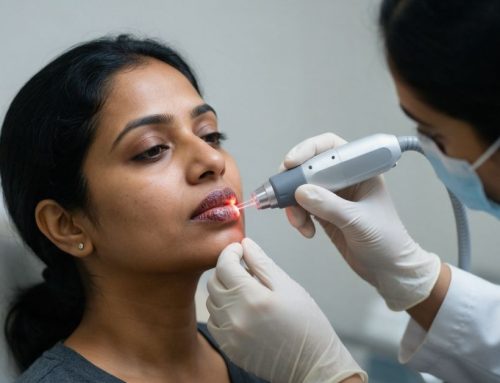
- Cosmetic tattoos. Eyebrow, lip and eyeliner tattoos often contain iron-based pigments that may turn dark after laser. A test patch is wise, and the area near the eyes needs special care
- Coloured tattoos. May need more than one wavelength and more sessions
- Tattoos on darker skin. Settings must be careful to protect the skin
- Previous scarring or keloid tendency. Tell the doctor
- Healing skin conditions, such as eczema or psoriasis in the area
- Pregnancy or breastfeeding. Discuss with a doctor first
- Recent sun exposure or a tan. Treatment is usually delayed
- Certain medicines. Some make the skin more sensitive to light
Cost: what shapes the price
Prices differ between clinics, and it is hard to give a number that is true for everyone. Here are the factors that influence what you will pay.
- Size of the tattoo. Larger tattoos need more time and more laser pulses, and cost more
- Number of sessions. Total cost is the per-session cost multiplied across the whole plan
- Colours and ink density. Colourful, dense or layered tattoos usually need more sessions
- The device. Different lasers cost differently to run, and some tattoos need more than one device or wavelength
- Who performs the treatment. A doctor-led plan is different from a service without medical supervision
- The clinic. Set-up, hygiene and follow-up care are part of the price
- What is included. Consultation, numbing cream, aftercare products and review visits may be bundled or billed separately
- Pricing structure. Per session, per size band or as a package
Useful questions to ask: How did you estimate the number of sessions? What is included in the price? What happens if I need more sessions than planned? How are complications handled?
How to choose where to go
Some practical points when comparing clinics in Hyderabad.
- See the doctor, not only the front desk. The person planning the treatment should examine the tattoo
- Ask about the laser and why it suits your tattoo and skin tone
- Ask how many sessions you are likely to need and how that was worked out
- Look for caution. A careful clinic will talk about risks and the chance of a faint shadow remaining
- Be wary of guarantees, such as “100 percent removal in three sessions”
- Ask about aftercare and follow-up
Alternatives to laser
Depending on your reason for wanting the tattoo gone, there may be other routes.
- Cover-up tattoo. A new design over the old one. Works best when the new design is larger and darker
- Partial fading first. Some people fade the tattoo with laser so that a cover-up looks better
- Surgical removal. Cutting out the tattoo, suitable for small tattoos in places where the skin can be stitched. It leaves a scar
- Other methods. Dermabrasion and chemical or salt-based techniques have a higher risk of scarring and are generally not recommended
A doctor can talk you through which option makes sense.
When to see a dermatologist before starting
Speak with a doctor first if:
- You have dark skin and want to know which settings are safe
- You have a cosmetic tattoo on or near your face
- You tend to scar or form keloids
- You have a skin condition in the area
- You are unsure how many sessions you can afford or commit to
A short consultation can save you from starting something you cannot complete.
FAQ
How much does laser tattoo removal cost in Hyderabad?
It depends on the size, colours and depth of the tattoo, how many sessions are needed, the laser used and the clinic. A clinic should give you an estimate after examining the tattoo. Use the questions in this guide to compare quotes.
How many sessions will I need?
Usually several, spaced about six to eight weeks apart. Small black tattoos may need fewer. Large, dense or coloured ones may need many more.
Is laser tattoo removal painful?
Most people describe it as a snapping, hot sensation. Comfort measures such as numbing cream or cooling are available, and your doctor can advise.
Will my tattoo disappear completely?
It may fade a lot, and some tattoos clear almost entirely, but it cannot be guaranteed. A faint shadow or skin change may remain.
Can all colours be removed?
Black and dark blue usually respond best. Greens, yellows, reds and white or pastel inks can be harder.
Is it safe for Indian skin?
It can be, when the right laser, settings and aftercare are used. There is a risk of pigment changes in deeper skin tones, so choose carefully.
How long is the recovery?
Redness and swelling settle in a few days. Blisters or scabs may take one to two weeks to heal. The skin needs time between sessions.
Can I remove an eyebrow or lip tattoo?
Possibly, but cosmetic tattoos can darken after laser and sit near delicate areas. A test patch and a careful assessment are important.
Can I go in the sun between sessions?
Sun exposure raises the risk of pigment changes and slows healing. Protect the area and follow your doctor’s advice.
Does the tattoo ink go into my body?
The laser breaks ink into tiny particles, which the body clears gradually through the immune system. This is how the treatment works.
The takeaway
Laser tattoo removal is a gradual process, not a one-visit fix. How many sessions you need and what it costs depend on the size, colours, depth and position of your tattoo, your skin tone and how you heal.
The best preparation is a proper consultation, honest expectations and a clinic that explains the risks clearly.
If you would like your tattoo assessed, you can contact Dr. Nishita’s Clinic for Skin, Hair & Aesthetics in Banjara Hills, Hyderabad. Treatment is advised only after consultation. Individual results vary.
Medically reviewed by Dr. Nishita Ranka, MBBS, DDVL – Dermatology, 06118. This article is for general information and is not a substitute for medical advice.
Book a consultation: wa.me/919381218003
— Dr. Nishita Ranka | Consultant Dermatologist | Dr. Nishita’s Clinic for Skin, Hair & Aesthetics, Hyderabad
Explore More Articles: