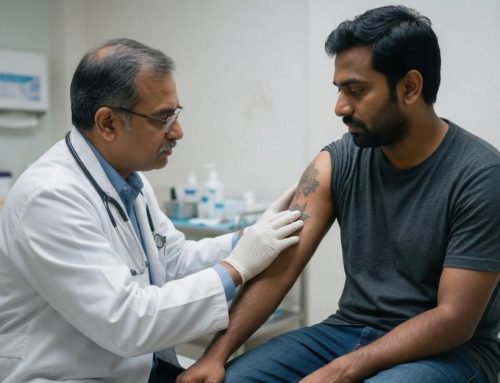
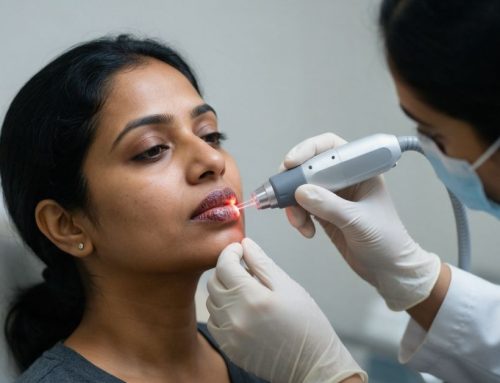
Hyderabad has no shortage of skin clinics. Search “skin specialist” and you will find hundreds, each with a polished website, a long list of treatments and plenty of before-you-even-ask confidence.
That is exactly the problem. When every clinic looks good online, it is hard to tell which one is right for your skin. And skin is not a place to guess. A wrong diagnosis, an unsuitable treatment or a procedure done carelessly can leave marks that are hard to undo.
This guide gives you a simple way to choose. It covers what qualifications to check, how to verify a doctor, what a good consultation looks like, and a few warning signs worth noticing.
First, know who treats what
The words “skin specialist”, “cosmetologist”, “aesthetic physician” and “dermatologist” are often used loosely. They are not the same.
- Dermatologist. A doctor who completed MBBS and then a recognised postgraduate qualification in dermatology, such as MD (Dermatology, Venereology and Leprosy), DNB or a diploma such as DVD. Dermatologists are trained to diagnose and treat conditions of the skin, hair and nails, including medical and cosmetic concerns.
- Aesthetic physician or cosmetologist. Often a doctor with a shorter certificate or fellowship in cosmetic procedures. Some are also dermatologists. Others come from a different background.
- Plastic surgeon. A surgeon trained in reconstructive and cosmetic surgery. Different from a dermatologist, though some procedures overlap.
- Technician or therapist. Not a doctor. May perform some treatments under supervision, depending on the clinic and the treatment.
None of these labels guarantees a good outcome by itself. But the training behind the title tells you what the person has been prepared to diagnose and treat. If you have a medical skin problem such as a rash, persistent acne, hair fall, pigmentation or a mole that changed, a dermatologist is the right starting point.

Step 1: Check the qualifications
Look for the details, not only the word “Dr”.
What to look for
- MBBS plus a postgraduate dermatology degree. MD in Dermatology, Venereology and Leprosy, DNB in Dermatology, or a recognised diploma
- Where they trained. Reputable medical colleges and hospitals
- Additional training. Fellowships or certificates in areas such as dermatosurgery, lasers or trichology are useful extras, but they sit on top of a dermatology degree, not instead of one
Things to be careful about
- Only a short certificate course listed and no medical degree
- Qualifications that are vague or impossible to look up
- Titles that sound impressive but do not name a recognised university or board
Step 2: Verify the registration
Every practising doctor in India must be registered. This is the single most useful check, and it takes a few minutes.
- Doctors are registered with a State Medical Council (in Telangana, the Telangana State Medical Council) and, under the National Medical Commission, in the National Medical Register.
- A registered doctor has a registration number. Under the NMC’s guidelines on advertising and public communication, doctors are expected to show their name, qualifications and registration status on their websites and online posts.
- You can usually check a doctor’s details on the NMC’s National Medical Register or the state council’s list.
If you cannot find a registration number on a clinic’s website or posts, ask for it. A genuine doctor will have no trouble sharing it.
Step 3: Look at experience, but read it carefully
Years of practice matter, but they are not the whole picture.
Ask or look for:
- How long they have been practising dermatology, not only how long a clinic has existed
- What they spend most of their time treating. A dermatologist who mostly treats acne and hair concerns may be a better fit for you than one who mainly does a different type of procedure, and the other way round
- Whether they do the procedure themselves or whether someone else performs it
Step 4: Look for a medical approach, not a menu
A good dermatologist starts with questions. A poor experience often starts with a price list.
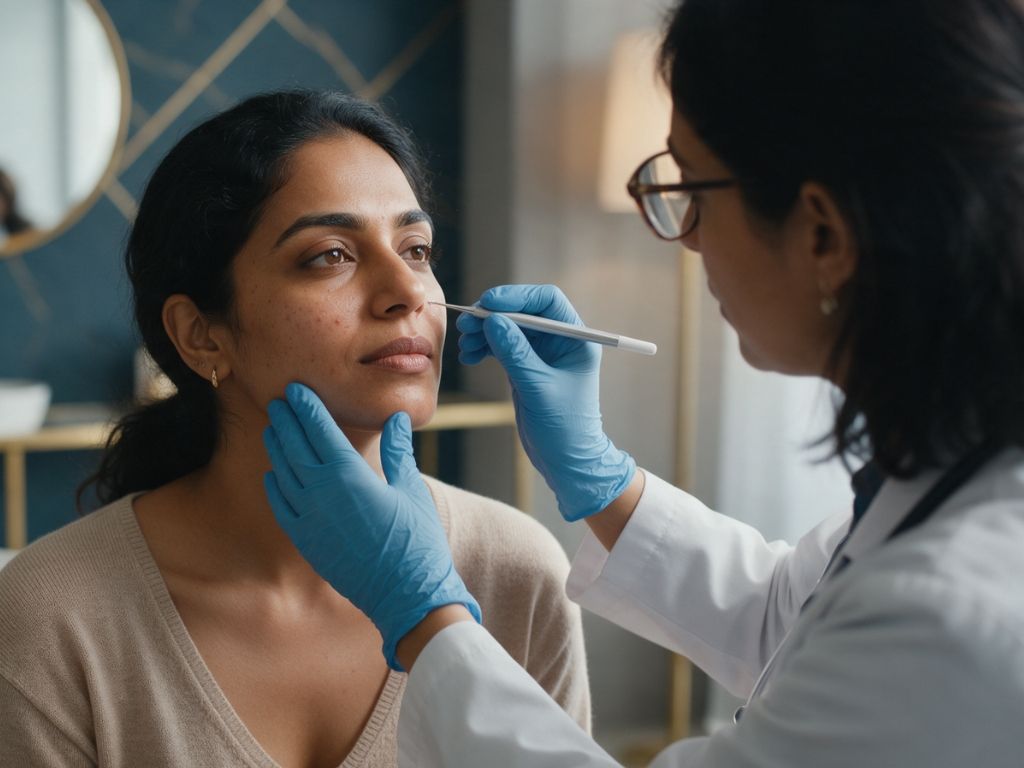
At a good consultation, you can expect the doctor to:
- Listen first. They ask when the problem started, what you have tried, what makes it worse, and your medical history.
- Examine your skin. Not a glance. A proper look, sometimes with a magnifying tool, and possibly a test.
- Explain what they think is going on. In words you can follow.
- Offer options, including the option to do less. Sometimes a good routine and patience is better than a procedure.
- Discuss risks and what is realistic. Not only the benefits.
- Give you time to decide. You should never feel hurried into a procedure on the spot.
If a clinic recommends several treatments before examining you, take a moment.
Step 5: Match the doctor to your concern
Different concerns call for different strengths. A few examples:
| Your concern | What to look for |
| Acne, rashes, eczema, psoriasis, fungal infections | A dermatologist with a strong medical practice |
| Hair fall, thinning, dandruff | A dermatologist who examines the scalp and orders tests when needed |
| Pigmentation, melasma, dark circles | Someone who talks about causes and sun protection, not only treatments |
| Moles, warts, lumps or skin growths | A dermatologist trained in dermatosurgery |
| Laser, peels, skin boosters, injectables | A dermatologist or trained physician who explains the risks and the plan |
| Children’s skin issues | A doctor comfortable treating children |
Step 6: Ask about the clinic set-up
Where you are treated matters, especially for procedures.
- Hygiene. Clean rooms, single-use needles and sterile equipment
- Equipment. Approved, maintained devices used by trained people
- Emergency preparedness. For injectable or laser procedures, the clinic should know what to do if something goes wrong
- Follow-up. Is there a way to reach the clinic if you have a problem afterwards?
- Privacy. Respect for your privacy, and a clear policy about photographs
Step 7: Read online reviews with care
Reviews can give clues, but they are an imperfect guide.
- Look for patterns across many reviews, such as comments on how the doctor listens or explains, not a single glowing or angry post
- Be aware that reviews can be curated or solicited
- Do not rely on before-and-after photos as proof. Lighting, angles and editing can make results look better or worse. Indian medical advertising rules also restrict how doctors can use such material, so their absence is not a bad sign
- A clinic that asks you to remove a negative review or offers a discount for a positive one is not following good practice
Warning signs worth noticing
None of these alone proves a problem, but together they are reason to pause.
- Guarantees. “100 percent results”, “permanent cure”, “no side effects”
- Pressure to decide today, or offers that expire soon
- No proper consultation, or a treatment recommended before any examination
- A different person than the doctor carrying out a procedure without telling you
- No visible name, qualification or registration number
- Unclear pricing or add-ons that appear after the fact
- Dismissing your questions about risks, alternatives or aftercare
- Treatments that do not match your problem, such as a laser for something that needs medicine
What to bring to your appointment
A little preparation helps the doctor help you.
- A list of your concerns, in order of importance
- The products you currently use, including creams, supplements and home remedies. Photos of the labels are fine
- Your medical history, including allergies, medicines and past treatments
- Photos of how your skin looked earlier, if the problem comes and goes
- Previous reports or prescriptions
- Questions you want answered
Come with clean skin if you can, and let the doctor know about any treatment you have had recently.
Questions worth asking
- What do you think is causing my problem?
- What are my options, and what is your recommendation?
- What are the risks and the common side effects?
- How long will it take, and how will we know it is working?
- What happens if it does not work or I have a reaction?
- What will it cost in total, and what is included?
- Do I really need this treatment now?
A good doctor will not mind any of these.
Choosing for procedures, not only medical problems
If you are looking at laser, injectables, peels or similar treatments, the stakes are a little different, because you are choosing the procedure and often the timing.
- Ask who will perform it and what experience they have with it
- Ask what happens if you are not happy, or if there is a complication
- Ask for the product or device name and why it was chosen for you
- Take your time. A short wait costs nothing, but a rushed decision can
A note on location and convenience
Whether you search in Banjara Hills, Jubilee Hills, Madhapur, Gachibowli or elsewhere, convenience does matter. If you are going to need regular visits, a clinic you can reach easily and one that follows up properly makes the treatment easier to stick to. But distance should never outweigh qualifications and trust.
When to see a dermatologist soon
Do not wait if you notice:
- A mole that changes in size, shape or colour, bleeds or itches
- A sore that does not heal
- A rapidly spreading rash, fever with a skin rash, or blistering
- Sudden patchy hair loss
- Painful, swollen or pus-filled skin
- A skin reaction after a treatment or new product
FAQs
What qualifications should a dermatologist in Hyderabad have?
A medical degree (MBBS) plus a recognised postgraduate qualification in dermatology, such as an MD in Dermatology, Venereology and Leprosy, a DNB or a diploma. Extra fellowships are a bonus but do not replace this.
How can I check if a doctor is registered?
Ask for their registration number and check it with the National Medical Register or the state medical council. Doctors are expected to show their registration details on their websites and online posts.
Is a cosmetologist the same as a dermatologist?
No. The terms are used loosely. A dermatologist is a medical specialist in skin, hair and nails. A cosmetologist or aesthetic physician may have a shorter course in cosmetic procedures. Always ask about the person’s training.
Do I need a referral to see a dermatologist?
Usually not. You can book directly. Some insurance plans have their own rules, so check yours.
How long does a first consultation take?
It varies, but a proper first visit with history and examination often takes some time. If it feels rushed, it is worth asking whether you can discuss your concerns more fully.
Should I choose the cheapest option?
Price matters, but it should not be the only factor. Compare what is included, who is treating you and how problems are handled.
Can I trust online reviews?
Use them as one input among many. Look for patterns and detail, and weigh them against qualifications and your own experience at the consultation.
What if I am unhappy with the advice I got?
You are free to seek a second opinion, especially before a procedure or a long course of
treatment. A good doctor will not take it personally.
The takeaway
Choosing a dermatologist comes down to a few simple things: check the qualifications, verify the registration, look for a doctor who listens and examines before recommending, and be careful with guarantees and pressure.
Take your time. Your skin will still be there after a second opinion.
If you would like to book a consultation, you can contact Dr. Nishita’s Clinic for Skin, Hair & Aesthetics in Banjara Hills, Hyderabad. Treatment is advised only after consultation. Individual results vary.
Medically reviewed by Dr. Nishita Ranka, MBBS, DDVL – Dermatology, 06118. This article is for general information and is not a substitute for medical advice.
Book a consultation: wa.me/919381218003
— Dr. Nishita Ranka | Consultant Dermatologist | Dr. Nishita’s Clinic for Skin, Hair & Aesthetics, Hyderabad
Explore More Articles: