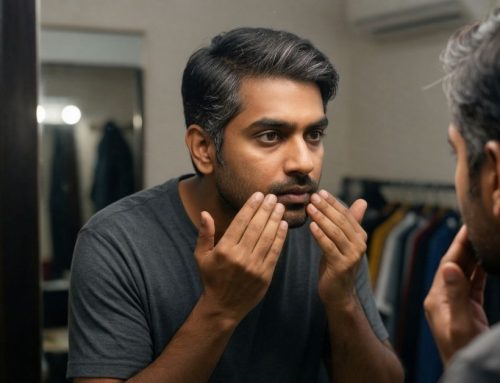
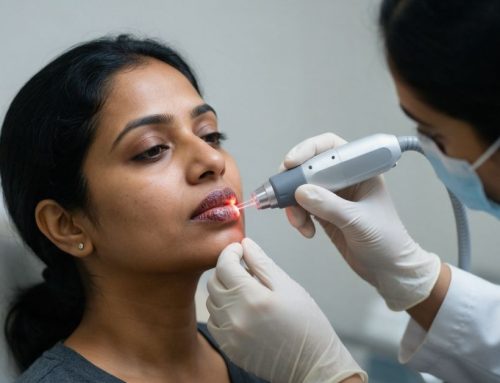
At some point, most people notice it. The jawline looks softer, the cheeks sit a little lower, or the skin on the neck has lost some of its firmness. You search for options, and two names keep coming up: HIFU and MNRF.
They sound similar and both are marketed as non-surgical skin tightening. But they work in different ways, suit different concerns and come with different recovery. Choosing between them is less about which one is “better” and more about which one fits your skin and your goals.
This guide explains how each works, who they tend to suit, what recovery looks like, the risks, and what shapes the cost.
Why skin loosens
Skin stays firm because of collagen and elastin, proteins that give it structure and bounce. From our late twenties, we make less of them. Sun exposure, smoking, weight changes, genetics and hormonal changes speed things up.
Underneath the skin, there is also a deeper supporting layer, and fat and bone change shape with age. So “loose skin” can come from several layers at once. That matters, because the two treatments reach different depths.
What is HIFU?
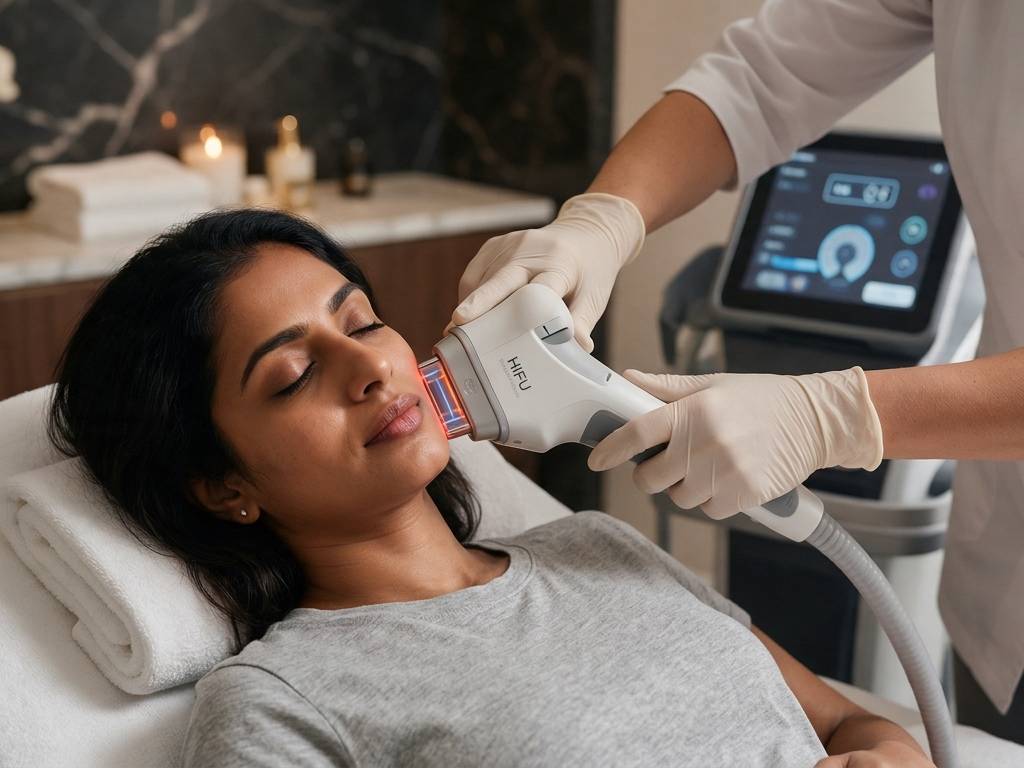
HIFU stands for high-intensity focused ultrasound. It is the same basic idea as a magnifying glass focusing sunlight, only with ultrasound energy.
How it works. A handheld device sends focused ultrasound through the skin to specific depths, without cutting or breaking the surface. At those points, it creates tiny areas of heat. The body responds by repairing the area and building new collagen over the following weeks and months.
What depth does it reach? Depending on the cartridge, HIFU can target different layers, including a deeper structural layer under the skin (often called the SMAS) that is also addressed in surgical facelifts. That is the reason it is used for lifting and firming on areas such as the jawline, brow and neck.
What it is used for. Mild to moderate skin laxity, early jowls, a softening jawline, slight sagging of the brow and neck.
What is MNRF?
MNRF stands for microneedling radiofrequency. As the name suggests, it combines two things:
- Microneedling. Very fine needles create tiny channels in the skin.
- Radiofrequency. Energy is delivered through the needle tips, heating the deeper layers of skin where the tips sit.
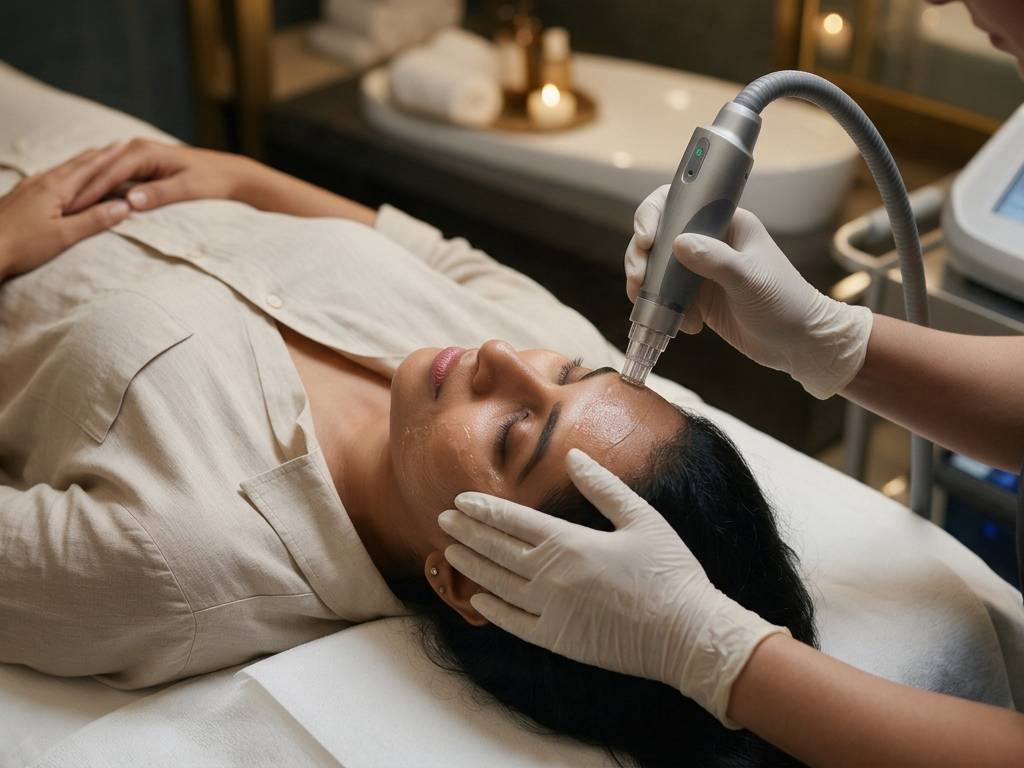
How it works. The needles enter the skin, and the radiofrequency energy heats the dermis, the layer where collagen is made. The skin responds by repairing and remodelling, which over time is linked to improvement in firmness and texture.
What depth does it reach? The depth is adjustable, often from shallow to a few millimetres. It works in the dermis, not in the deeper structural layer HIFU reaches.
What it is used for. Skin texture, enlarged pores, acne scars, fine lines, mild laxity, and some stretch marks. It is often chosen when the main concern is how the skin looks and feels, more than how it hangs.
HIFU vs MNRF at a glance
| HIFU | MNRF | |
| Technology | Focused ultrasound | Microneedles plus radiofrequency |
| Skin surface | Not broken | Tiny needle punctures |
| Works at | Deeper layers, including the structural layer under the skin | The dermis, adjustable depth |
| Best suited for | Mild to moderate laxity, jawline and neck | Texture, pores, scars, fine lines, mild laxity |
| Sensation during treatment | Heat and a deep, zapping or tingling feel; can be uncomfortable | Pricking and warmth; numbing cream is usually used |
| Downtime | Minimal for most | A few days of redness and small marks |
| How results appear | Gradually over a few months | Gradually over weeks to months, often in a series |
| Number of sessions | Often one, repeated at an interval your doctor advises | Usually a series |
| Skin tone concerns | Generally considered lower pigmentation risk | Needs care in deeper skin tones, because of the risk of darkening afterwards |
This table is a general guide. A doctor decides what applies to you after examining your skin.
Who might suit which
HIFU may suit you if:
- Your main concern is sagging along the jawline, neck or brow
- You have mild to moderate laxity and want a non-surgical option
- You prefer little to no downtime
- Your skin surface is fairly healthy and your concern is more about lift than texture
MNRF may suit you if:
- You are bothered by texture, open pores, acne scars or fine lines
- You want skin that looks smoother and firmer more than lifted
- You are fine with a few days of visible redness
- Your skin is not currently inflamed, infected or sun-damaged
Neither is a good fit when:
- You have significant sagging. Treatments like these have limits, and some people do better with surgical options. A doctor will tell you honestly if that is you.
- You have active acne with infection, open wounds or a rash in the area
- You are pregnant
- You have a pacemaker or metal implants in the area, since this matters for radiofrequency devices. Always tell your doctor
- You tend to form keloids (raised scars) or have a skin condition that could flare after treatment
- You have taken isotretinoin recently. Ask your doctor about the timing
What to expect from the treatment
HIFU
You will start with a consultation and a careful look at your face. The area is cleaned, a gel is applied and the device is moved in lines across the skin. You may feel heat and a sharp, deep sensation as each pulse is delivered. Comfort measures differ, so ask what is offered.
A session usually takes somewhere between 30 and 90 minutes, depending on the area. You can usually go back to your normal day.
MNRF
The skin is cleaned, and a numbing cream is usually applied for a period before the procedure. The device is then passed over the skin in sections, with the needles entering to the chosen depth. You may feel pricking and warmth.
Afterwards the skin looks pink or red, sometimes slightly swollen, with tiny dots where the needles went in.
Recovery and downtime
After HIFU
- Mild redness or swelling is common and usually settles in hours to a couple of days
- Some people feel tenderness or a bruised sensation when they press on the area
- Occasionally, numbness, tingling or small bruises can occur and typically settle in time
- You can typically wear makeup the same day, unless your doctor says otherwise
After MNRF
- Redness and a rough, sandpaper-like feel for a few days
- Mild swelling in the first day or two
- Tiny pinpoint marks that fade
- Skin may feel dry or tight while it heals
- Sun protection matters. Avoid direct sun and use a sunscreen as advised
Your doctor will give aftercare instructions. Following them closely makes a difference to how the skin recovers.
Results: what is realistic
Neither treatment is a facelift. Both aim for a modest, gradual improvement.
HIFU results usually build slowly over the following weeks to a few months, as new collagen forms. Many people notice a subtle firming and lift. How long it lasts varies from person to person, and it is influenced by age, lifestyle and how the skin continues to age.
MNRF results tend to build with a series of sessions. Texture and firmness may improve gradually. As with HIFU, how long it lasts differs from person to person.
Two points to keep in mind:
- Results differ between people. Age, skin quality, the starting point and healing all play a part.
- Your skin keeps ageing. Maintenance sessions may be advised at intervals your doctor recommends.
If a clinic promises dramatic or guaranteed results from either treatment, that is a reason to ask more questions.
Risks and side effects
Every procedure has risks, and a good consultation includes them. Common to rare ones include:
HIFU
- Temporary redness, swelling, tenderness
- Bruising
- Temporary numbness or tingling
- Rarely, nerve irritation (for example, a temporary weakness in a small area of the face)
- Rarely, burns or uneven results if the treatment is not well done
MNRF
- Redness, swelling, dryness
- Pinpoint bleeding or scabbing
- Post-inflammatory hyperpigmentation (darkening after healing), particularly in medium to deeper skin tones and if the sun is not avoided
- Infection, which is uncommon but possible
- Rarely, scarring
Most of these are less likely when the device is used properly, the right settings are chosen for your skin, and aftercare is followed. That is why who does the treatment matters as much as which treatment you choose.
Cost: what shapes the price
Prices vary between clinics and cities, and no honest number fits everyone. Rather than quote a figure, here are the factors that move the cost:
- The treatment area. A full face and neck is more than a small area.
- The device and consumables. Some devices use single-use cartridges or needle tips that add to the cost.
- How many sessions are needed. MNRF is usually a series, and HIFU may be repeated at an interval.
- Who performs it. A doctor with training and experience may charge differently from a centre where a technician does it.
- The clinic. Location, set-up and follow-up care are part of what you pay for.
- Add-ons. Numbing cream, aftercare products and review visits can be included or charged separately.
Useful questions to ask before booking: What exactly is included? How many sessions does my plan involve? Who will perform the treatment? What happens if I have a problem afterwards?
Can they be combined?
Sometimes. A doctor may plan HIFU for lift and MNRF for texture, spaced a suitable time apart. This is not for everyone, and it should be a decision made after an examination, not a package picked from a menu.
Other options to know about
HIFU and MNRF are not the only choices. Depending on your concern, a doctor might talk about other energy-based treatments, skin boosters, injectables, medical-grade skincare or, for more advanced laxity, surgical options. Good advice includes the possibility that you may not need any of these yet.
When to see a dermatologist
Book a consultation if:
- You are not sure which treatment fits your concern
- You have scars, melasma, active acne or a skin condition and want to know whether treatment is safe
- You have had a procedure before and had a reaction
- You want an honest view on what is realistic for your skin
FAQs
Which is better, HIFU or MNRF?
Neither is better for everyone. HIFU is more about lifting and firming looser areas such as the jawline. MNRF is more about skin texture, scars and pores, with some firming. The right choice depends on your concern.
Is HIFU painful?
Many people describe heat and a deep, sharp sensation that can be uncomfortable, especially near the bone. Tolerance varies. Ask what comfort measures are used.
How long does MNRF recovery take?
Most people have redness and a rough feel for a few days, and the skin looks normal again within about a week. It differs between people and with the settings used.
How many sessions will I need?
HIFU is often done as a single session that may be repeated after some months. MNRF is typically a series of sessions several weeks apart. Your doctor will plan this for you.
Is MNRF safe for Indian skin?
It can be, with the right settings, a doctor who has experience with deeper skin tones, and good sun protection afterwards. There is a risk of darkening after treatment, so choose carefully.
How long do HIFU results last?
It varies. Skin keeps ageing, so many people choose to repeat treatment at intervals their doctor suggests.
Can I have HIFU or MNRF if I have melasma?
It needs care. Heat can trigger melasma in some people. A doctor should assess your skin first and tell you whether it is wise.
Will I see results straight away?
Mostly not. Collagen takes time to build, so changes tend to show gradually over weeks to months.
What is the downtime for each?
HIFU usually has very little. MNRF has a few days of redness and small marks.
The takeaway
HIFU and MNRF both aim to firm the skin by encouraging collagen, but they reach different depths and suit different concerns. HIFU leans towards lift in the lower face and neck. MNRF leans towards texture, scars and pores, with some tightening.
The best way to choose is to have your skin examined and ask honest questions about suitability, risks and what is realistic. A good doctor will tell you if a treatment is not right for you.
If you would like to talk about skin tightening options, you can contact Dr. Nishita’s Clinic for Skin, Hair & Aesthetics in Banjara Hills, Hyderabad. Treatment is advised only after consultation. Individual results vary.
Medically reviewed by Dr. Nishita Ranka, MBBS, DDVL – Dermatology, 06118. This article is for general information and is not a substitute for medical advice.
Book a consultation: wa.me/919381218003
— Dr. Nishita Ranka | Consultant Dermatologist | Dr. Nishita’s Clinic for Skin, Hair & Aesthetics, Hyderabad
Explore More Articles: