Most rashes are harmless and clear up on their own within a few days, which is exactly why so many people wait them out before seeing anyone. That instinct is usually right. But “usually” is doing a lot of work in that sentence, and a small number of rashes are early signs of something that genuinely needs attention sooner rather than later.
The tricky part is that a lot of serious and harmless rashes can look surprisingly similar in the first day or two. So rather than trying to diagnose yourself from a photo comparison online, it helps to know the actual warning signs that separate “this will pass” from “this needs a doctor,” regardless of what the rash looks like.
Signs That Mean You Should See a Dermatologist Soon
The rash is spreading quickly. A rash that’s noticeably larger or has spread to new areas of your body within a day or two is behaving differently than most simple irritations, which tend to stay fairly contained.
It’s not improving after a few days. Most mild rashes, from a minor irritant or a brief allergic reaction, start settling within two to three days. One that’s sticking around longer than that, or getting worse instead of better, is worth having looked at.
It’s intensely itchy or painful. Mild itching is common with all sorts of rashes. Itching or pain severe enough to disrupt your sleep or daily activities is a different situation and usually means there’s more going on than surface irritation.
It’s blistering, oozing, or crusting. These signs can point to an infection, a more significant allergic reaction, or a skin condition that needs a specific treatment rather than just time.
It appeared after starting a new medication. Drug-related rashes can range from mild to serious, and some can worsen quickly. Any rash that shows up within days to a few weeks of starting a new medicine is worth mentioning to a doctor promptly, even if it seems mild at first.
It keeps coming back in the same spot, or keeps changing. A rash that recurs repeatedly, or one that keeps changing in appearance, colour, or texture, is worth investigating rather than treating each flare-up as a one-off.
You also have joint pain, fatigue, or other symptoms alongside it. A rash combined with symptoms elsewhere in the body can be a sign of an underlying condition affecting more than just the skin, which is a reason to get it looked at rather than treating it as purely a skin issue.
Warning Signs That Need Urgent or Emergency Care
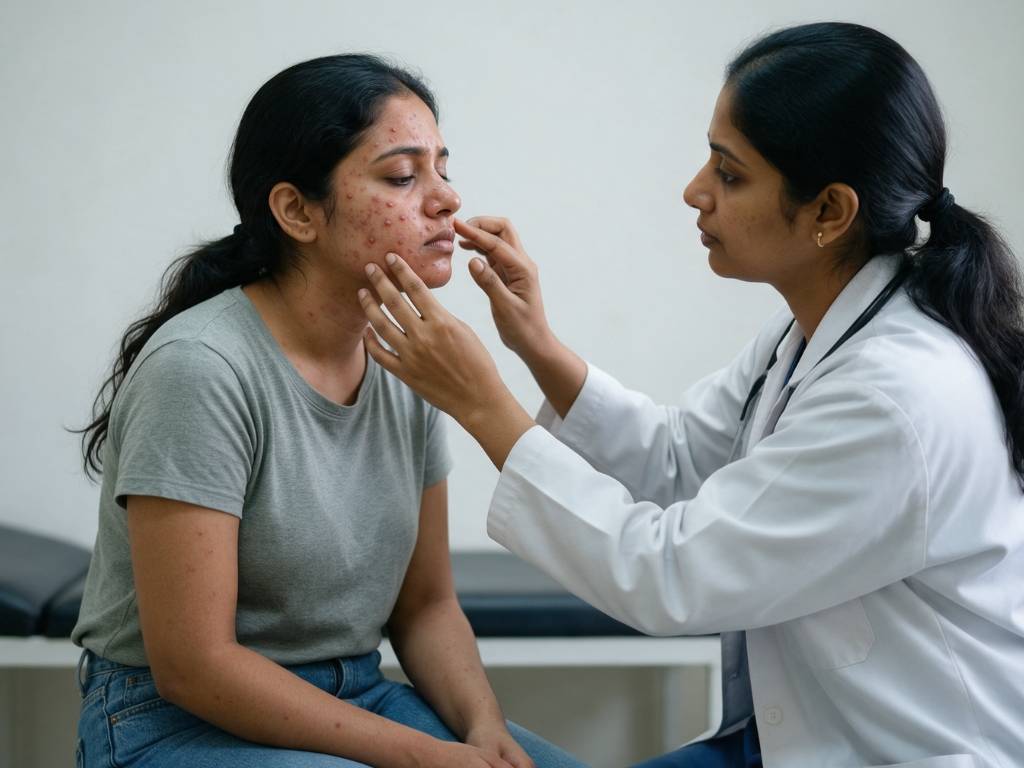
Some rashes come with signs that shouldn’t wait for a routine appointment. Seek urgent medical care, at an emergency room if needed, if a rash is accompanied by any of the following:
- Swelling of the face, lips, tongue, or throat
- Difficulty breathing or swallowing
- A rash that’s spreading rapidly over the body, especially with fever
- Widespread blistering or skin that’s peeling away in sheets
- Purple or dark red spots that don’t fade when you press on them
- High fever alongside the rash
- Severe pain out of proportion to how the rash looks
- Signs of a severe allergic reaction after a new medication, food, or insect sting
These combinations can point to conditions like a severe allergic reaction, a serious drug reaction, or a bloodstream infection, all of which need immediate medical attention rather than a wait-and-watch approach. If you’re ever genuinely unsure whether a rash is an emergency, it’s safer to get it checked urgently than to assume it isn’t.
Why “It’s Probably Nothing” Isn’t Always a Safe Default
Most rashes really are minor, so this isn’t about creating alarm over ordinary skin irritation. It’s about recognising that a rash isn’t just one thing, it’s a symptom that shows up with dozens of different causes behind it, from a mild reaction to a new soap, to an infection, to a sign of an internal condition. The skin often reacts before other symptoms become obvious, which is part of why dermatologists sometimes catch something significant that started out looking like “just a rash.”
The warning signs above exist precisely because appearance alone isn’t a reliable way to tell a harmless rash from one that needs attention. Behaviour, how it spreads, how long it lasts, what else comes with it, tells you more than what it looks like on any given day.

What Happens at a Dermatologist Visit for a Rash
A dermatologist will typically look closely at the rash’s pattern, texture, and distribution across your body, ask about when it started and what changed around that time, new products, medications, foods, or exposures, and review your broader health history. Depending on what they see, they might take a closer look with a dermatoscope, recommend a skin scraping or biopsy if the diagnosis isn’t clear from examination alone, or suggest bloodwork if an internal cause is suspected. Treatment depends entirely on the actual cause, which is exactly why self-treating a rash you can’t identify often doesn’t resolve it.
A Few Things to Avoid While You Wait
Avoid scratching as much as possible, since broken skin increases the risk of infection. Skip harsh soaps, hot water, and new skincare products until the rash has resolved, since these can worsen irritation. Don’t apply random home remedies, especially anything containing strong essential oils, vinegar, or unverified “natural” treatments, since these can irritate already sensitive skin further and sometimes mask what a doctor needs to see to make an accurate diagnosis.
FAQs
How do I know if a rash is serious or something I can wait out?
Watch for how it behaves rather than just how it looks: rapid spreading, worsening after a few days, intense itching or pain, blistering, or accompanying symptoms like fever are all signs it’s worth seeing a dermatologist rather than waiting it out.
What are the red flag symptoms that mean a rash is an emergency?
Swelling of the face or throat, difficulty breathing, widespread blistering or peeling skin, dark spots that don’t fade under pressure, and high fever alongside the rash all need urgent medical attention, not a routine appointment.
Can a new medication cause a rash?
Yes. Drug-related rashes can appear anywhere from a few days to a few weeks after starting a new medicine, and can range from mild to serious. Mention any recent medication changes to your doctor if a rash appears.
Should I see a dermatologist even if the rash doesn’t itch or hurt?
If it’s spreading, not improving after several days, keeps recurring, or comes with other symptoms, it’s worth getting looked at even without significant itching or pain, since not all concerning rashes are uncomfortable in the early stages.
Is it okay to use over-the-counter cream on a rash before seeing a doctor?
For a mild, localised rash without any warning signs, a gentle over-the-counter option is often reasonable for a couple of days. If it’s not improving, is spreading, or shows any of the warning signs above, see a dermatologist rather than continuing to self-treat.
When should a rash be treated as a medical emergency rather than something to book an appointment for?
If it comes with facial or throat swelling, breathing difficulty, rapid spreading with fever, widespread blistering, or non-fading dark spots, treat it as an emergency and seek immediate care rather than waiting for a scheduled visit.
Book a consultation: wa.me/919381218003
— Dr. Nishita Ranka | Consultant Dermatologist | Dr. Nishita’s Clinic for Skin, Hair & Aesthetics, Hyderabad
Explore More Articles: