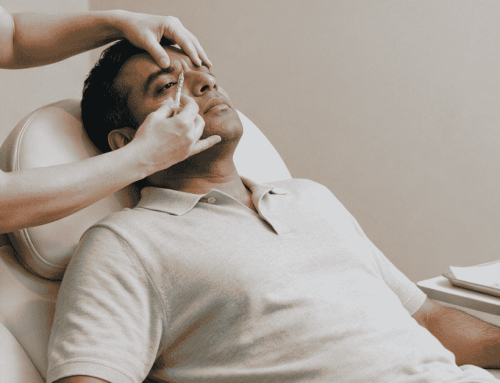
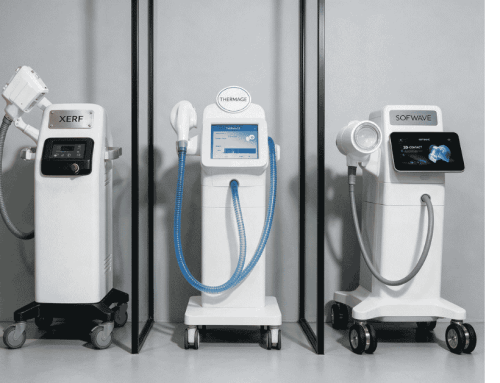
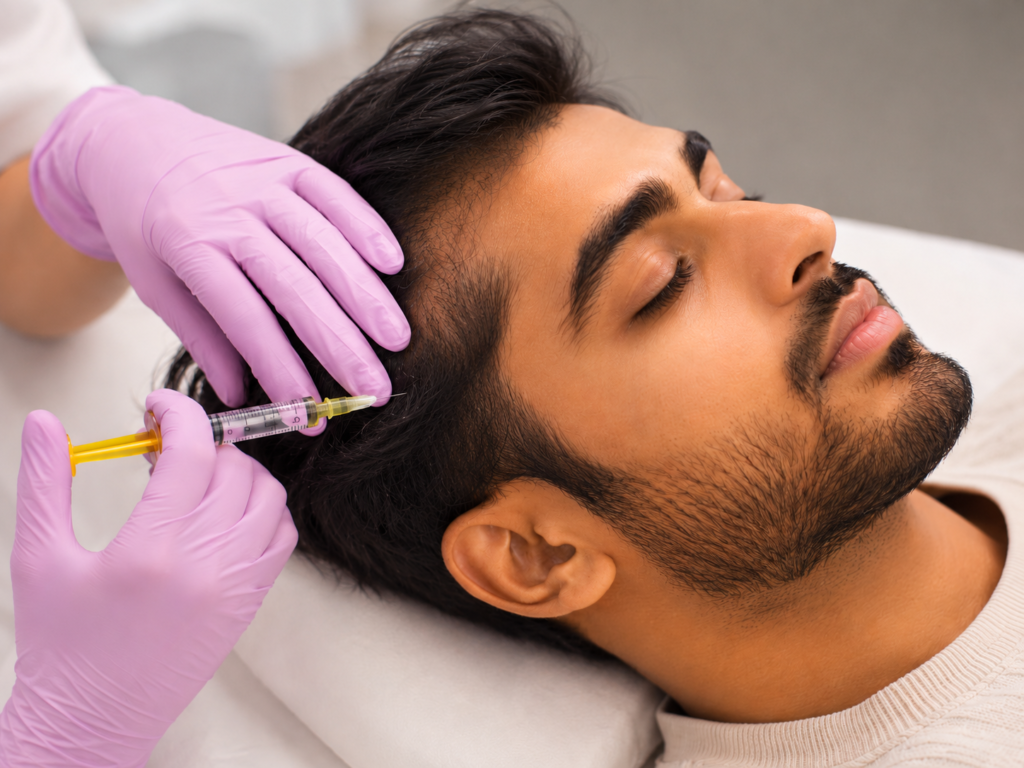
 Most patients asking about GFC hair treatment have already heard of PRP and assume GFC is either the same thing under a different name, or a stronger version of it. Neither is accurate. GFC (Growth Factor Concentrate) hair treatment is an advanced regenerative therapy that uses growth factors from your own blood to reduce hair fall, improve hair density, and support healthier hair growth. This guide explains how GFC works, its benefits, side effects, expected results, and how it compares with PRP.
How GFC Hair Treatment Is Prepared
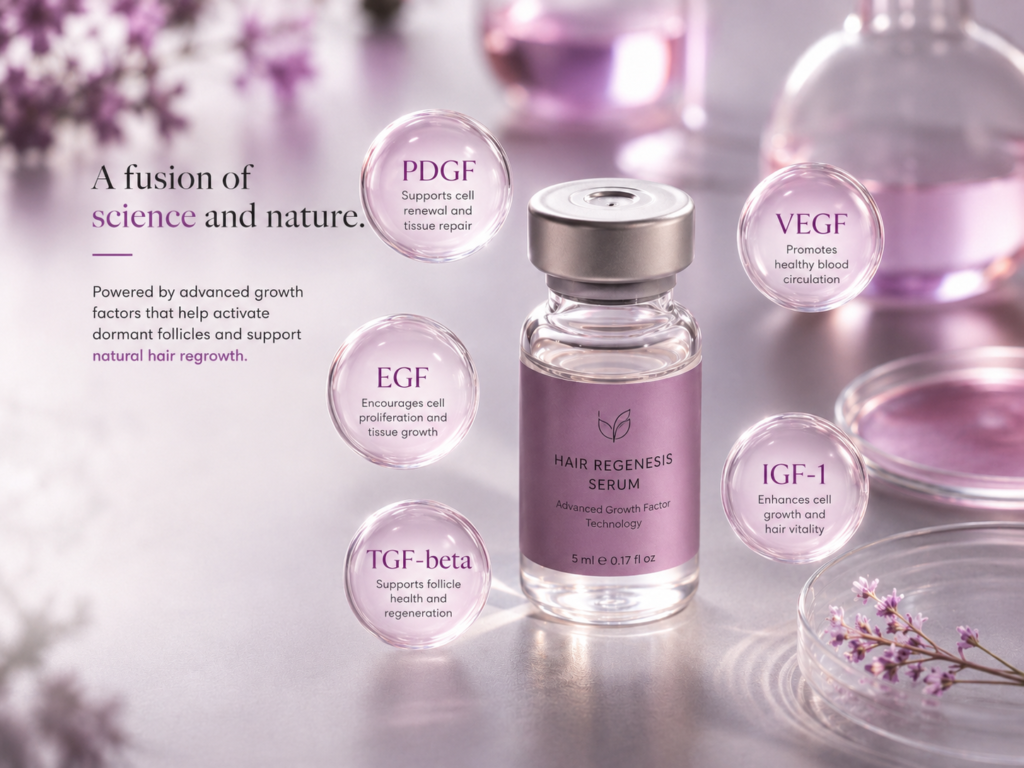 A GFC kit separates and concentrates growth factors from the patient’s own blood while removing red blood cells and, in most protocols, isolating the platelets so their contents are released directly rather than requiring an external activator such as calcium chloride, which PRP preparation typically needs. The result is a growth-factor-rich concentrate — containing PDGF, VEGF, EGF, TGF-beta, and IGF-1 among others — with fewer inflammatory cells than standard PRP. In practice, this means less post-procedure redness and swelling for a comparable concentration of active growth factors, which is the primary clinical reason GFC is often preferred over PRP for facial and scalp injections.
How It Works
Hair follicles cycle through growth (anagen), transition (catagen), and rest (telogen) phases. In androgenetic alopecia and telogen effluvium, an increasing proportion of follicles shift into telogen prematurely, and the anagen phase of each cycle shortens, producing progressively finer, shorter-lived hair. The growth factors in GFC act on the dermal papilla and follicular stem cells to prolong anagen, stimulate angiogenesis around the follicle to improve its blood supply, and support keratinocyte proliferation. None of this reverses miniaturisation caused by androgens on its own — which is why GFC is typically used alongside, not instead of, medical therapy such as topical minoxidil or oral finasteride in appropriate candidates, rather than as a replacement for either.
Benefits of GFC Hair Treatment
- Reduced hair shedding, usually the first change patients notice, typically within 4 to 6 weeks of the initial sessions.
- Increased hair density and shaft thickness over subsequent months, as more follicles are held in or recruited into anagen phase.
- Reduced inflammatory response, translating to lesser scalp redness, swelling, and downtime after each session.
- Absence of an external activation phase reduces preparation time and prevents the addition of an adjuvant to a treatment that is otherwise entirely autologous.
- Combinable with existing hair loss treatment, meaning it adds to the effect of minoxidil, finasteride, or a good hair-care routine rather than requiring a patient to choose between them.
Side Effects — What’s Actually Common, and What’s Rare
Because GFC is derived from the patient’s own blood, allergic reaction is essentially not a concern — the risk profile is different from injectable products that introduce a foreign substance. What patients do commonly experience is mild scalp tenderness, pinpoint bruising at injection sites, and transient swelling for 24 to 48 hours after a session, all of which resolve without treatment. A dull headache on the day of the procedure is reported occasionally, likely related to the injection process itself rather than the concentrate. Infection is rare when the procedure is performed with sterile technique, but it is the one complication worth naming explicitly, since it is the most serious realistic risk and is entirely dependent on how the session is carried out. Patients on blood thinners or with active scalp infections are advised against the procedure until those are addressed.
What Results to Expect, and When
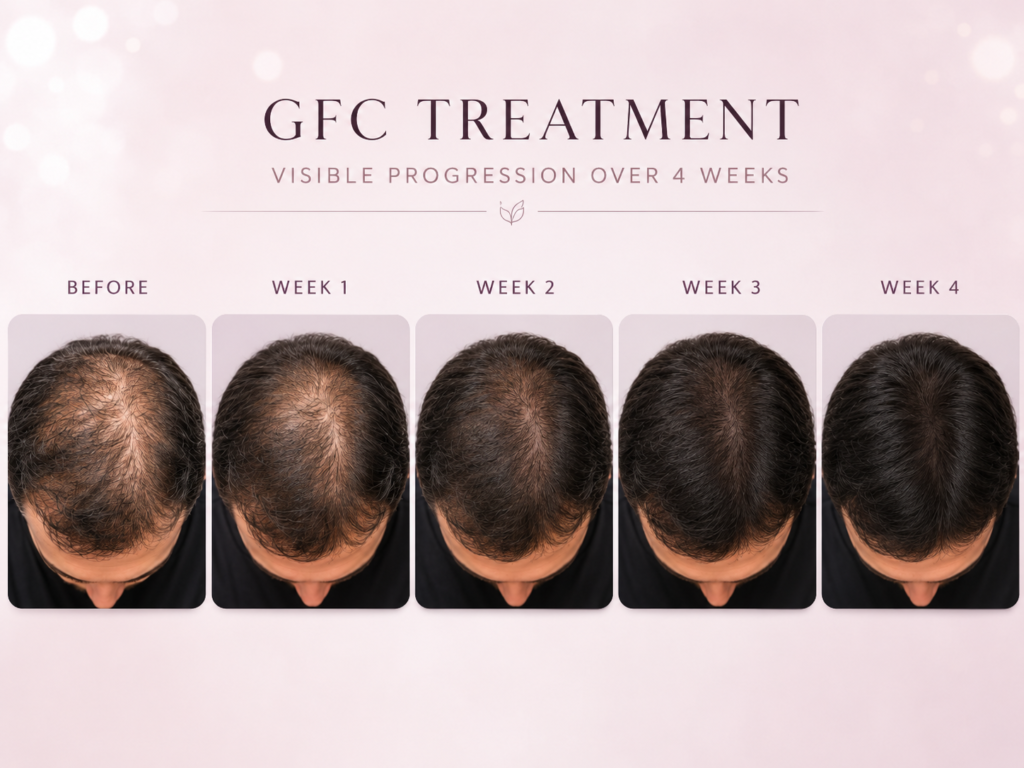 GFC is not a single-session treatment. A typical protocol runs 4 to 6 sessions spaced 3 to 4 weeks apart, followed by maintenance sessions every 6 to 9 months to sustain the effect, since growth factor stimulation is not permanent — it supports follicles that are still capable of responding, rather than creating new ones. Reduced shedding is usually the first sign of response, at 4 to 6 weeks. Visible improvement in density and hair shaft quality generally takes 3 to 6 months, and is best assessed through standardised photography rather than a mirror, since gradual change is easy to underestimate day to day. Patients with more advanced miniaturisation or long-standing androgenetic alopecia should expect a more modest response than those who start treatment while follicles are still largely viable — which is the main reason earlier intervention produces better outcomes than starting once hair loss is already advanced.
Who Is a Good Candidate
GFC works best on follicles that are miniaturised but not yet dormant — early-to-moderate androgenetic alopecia, diffuse thinning from telogen effluvium, and as an adjunct after hair transplant to support graft take and surrounding native hair. It is not a solution for areas of complete, long-standing baldness, where follicles are no longer present to stimulate. Unlike biotin supplementation, which only meaningfully helps hair when a true deficiency exists (see Biotin for Hair — What the Science Actually Says), GFC acts directly on follicle biology regardless of nutritional status, which is why the two are sometimes used together rather than as alternatives to each other.
FAQ’s
Is GFC the same as PRP for hair loss?
No. Both are derived from the patient’s own blood and work through growth factors, but GFC processing removes red blood cells and typically avoids the external activation step PRP requires, resulting in a more concentrated growth factor yield with a lower inflammatory load and less post-procedure redness.
Is GFC safe?
Yes, for patients who’ve been appropriately screened. Because it’s prepared entirely from the patient’s own blood, there’s no risk of allergic reaction or disease transmission from an external product, and the established side effects — mild bruising, tenderness, and transient swelling — are short-term and self-resolving. The main real risk is infection if sterile technique isn’t followed, and the procedure should be deferred in patients on blood thinners or with an active scalp infection until those are addressed.
How much does GFC cost?
There isn’t a single fixed price, since cost depends on the number of sessions required (typically 4 to 6 for an initial course), the area being treated, and the specific protocol used. Because pricing follows an assessment of the extent and pattern of hair loss, an in-person or video consultation gives a more accurate figure than a general estimate would.
Is GFC better than PRP?
Not universally — for hair regrowth specifically, the two are considered broadly comparable in effect, since both work by delivering concentrated growth factors to the follicle. GFC’s real advantage is procedural rather than a proven efficacy edge: the lower inflammatory cell content and absence of an external activator mean less post-treatment redness and swelling, which is why it’s often the preferred choice when downtime matters. The right choice usually comes down to tolerance for recovery time rather than one treatment being categorically stronger than the other.
How long does GFC last?
The effect isn’t permanent, since GFC supports follicles that already exist rather than creating new ones — once the growth-factor stimulus fades, follicles gradually settle back toward their baseline cycling pattern. Most patients sustain their results with a maintenance session every 6 to 9 months after completing the initial 4-to-6-session course.
What should I avoid after GFC?
For the first 24 to 48 hours, it’s best to skip washing the hair, applying styling products, using heat tools, and any activity that causes heavy sweating, since the scalp needs that window to settle without added friction or product buildup at the injection sites. Direct sun exposure on the scalp is worth limiting until the initial tenderness resolves, and alcohol is best avoided around the session itself.
How many GFC sessions are needed to see results?
Overall, a patient needs up to four to six initial sessions spaced three to four weeks apart. While obvious density improvement takes three to six months, reduced shedding is typically apparent within four or six weeks. Maintenance sessions are then scheduled generally every six to nine months.
What is the success rate of GFC?
There’s no single figure that applies across patients, because response depends heavily on how miniaturised the follicles already are at the time of treatment. Patients with early-to-moderate thinning typically see reduced shedding and a measurable improvement in density, while those with more advanced, long-standing hair loss tend to see a more modest response — which is the main reason earlier intervention outperforms starting once thinning is already significant.
Can women undergo GFC?
Yes. GFC is used for both male and female pattern hair loss and for telogen effluvium, including the diffuse postpartum shedding many women experience, since the follicle biology it acts on isn’t sex-specific. The same precautions apply regardless of gender — active scalp infection, blood-thinning medication, and pregnancy or breastfeeding are situations to flag to the treating doctor before starting.
Is GFC hair treatment painful?
Most patients experience only mild discomfort which is typically managed using a topical numbing cream applied at the beginning of the session. Mild bruising and tenderness may persist for up to two days after the procedure, but these effects are generally manageable and do not interfere with daily activities.
Can GFC be combined with minoxidil?
Yes — this is one of the more common combinations, since minoxidil addresses the vascular and hormonal drivers of thinning while GFC supports the follicle environment directly, and the two don’t interfere with each other’s mechanism. Most patients continue their regular minoxidil routine around sessions, though it’s typically paused for the day of the procedure itself to keep the scalp and injection sites free of topical product.
Can GFC regrow hair in completely bald areas?
No. GFC stimulates follicles that are miniaturised but still present — it cannot generate new follicles where none remain. Long-standing, fully bald areas generally require a hair transplant rather than growth-factor therapy.
Are there any long-term side effects of GFC?
No significant long-term side effects have been established, largely because the treatment uses the patient’s own blood components rather than introducing anything foreign. The known risks — bruising, tenderness, transient swelling, and rarely infection — are all short-term and resolve without lasting effect when the procedure is performed correctly
Book a consultation: wa.me/919381218003
— Dr. Nishita Ranka | Consultant Dermatologist | Dr. Nishita’s Clinic for Skin, Hair & Aesthetics, Hyderabad