XERF, Thermage FLX and Sofwave are non-surgical treatments that use controlled heat to improve mild skin looseness, but they do not work in exactly the same way.
XERF and Thermage FLX use radiofrequency, usually shortened to RF. Sofwave uses focused ultrasound. All three aim to heat selected tissues without cutting the skin. This controlled heating can start a repair response that gradually reorganises collagen, one of the proteins that helps skin feel firm and supported.
It is tempting to compare these devices by asking which one goes deepest or which one is newest. Those questions are easy to market, but they do not tell the whole story. A more useful comparison asks:
- What type of energy does the device use?
- Where does that energy create heat?
- What is the device actually cleared to treat?
- How strong is the clinical evidence for the result being promised?
The best device is not automatically the deepest or newest one. It is the one whose treatment pattern fits the patient’s skin thickness, facial structure, degree of laxity and treatment goal.
Radiofrequency and Ultrasound in Simple Terms
Radiofrequency sends electrical energy through tissue and converts it into heat. With monopolar RF devices such as Thermage FLX and XERF, the heat is spread through a three-dimensional area rather than placed on one perfectly fixed line. The exact pattern depends on the tip, energy setting, contact with the skin, cooling, treatment technique and the anatomy of the area.
Focused ultrasound works differently. It concentrates sound-wave energy within a more defined layer beneath the skin. Sofwave is designed to treat a relatively shallow part of the dermis, the supportive layer just below the skin’s surface.
An easy way to picture the difference is this: RF generally warms a broader volume of tissue, while focused ultrasound places heat within a narrower treatment zone. This is a simplified comparison, but it helps explain why the devices are not interchangeable.
What FDA Clearance Actually Means
The US Food and Drug Administration, or FDA, does not award aesthetic devices a ranking such as basic, advanced or premium.
These devices reached the US market through the 510(k) clearance pathway. In simple language, this means the manufacturer showed that the device was substantially equivalent to another legally marketed device for its stated use. This is called clearance, not full premarket approval.
The wording of the indication still matters. One device may be cleared specifically for wrinkles or lifting certain areas. Another may be cleared under a narrower surgical use, even if clinics also promote it for cosmetic tightening.
FDA clearance is therefore not a trophy for the “best” device. It tells us what use was reviewed in that particular submission and what evidence was provided to support it.
How XERF Works
XERF is a monopolar RF device that uses two frequencies: 6.78 MHz and 2 MHz. A frequency describes how quickly the electrical current changes direction. Patients do not need to understand the physics to compare treatments. The practical point is that the two frequencies are intended to create different heating patterns within the tissue.
The device offers settings described as shallow, middle and deep. These names should not be read as exact millimetre measurements. RF does not stop at one identical depth in every face. Facial thickness, tissue composition, contact, cooling, power and technique all influence how heat spreads.
What Is XERF FDA-Cleared For?
The current FDA clearance for XERF, K251327, lists its use in dermatologic and general surgical procedures for electrocoagulation and haemostasis. In plain language, these terms refer to using heat to coagulate tissue and control bleeding.
The clearance does not specifically list facial lifting, skin tightening or wrinkle reduction. Thermage FLX was used as the main comparison device in the application, but that does not give XERF every indication listed on the Thermage FLX label.
How Strong Is the Evidence for XERF?
The FDA submission did not include clinical tests in people. It included safety, software and material testing, along with laboratory studies on tissue outside the body. One comparison measured heating at a sensor depth of 3 mm and found similar heating and cooling behaviour between XERF and Thermage FLX under standardised test conditions.
That finding supports technical similarity under those conditions. It does not prove that the two devices produce equal cosmetic results in patients, and it does not show that XERF is better.
Human evidence is now emerging. A 2026 prospective study reported outcomes in 39 people who completed two XERF sessions and were followed for up to 90 days. The investigators reported short-term improvement and high patient satisfaction. However, the study did not include a control group, the follow-up was short, and it does not establish long-term durability or superiority over Thermage FLX or Sofwave.
XERF is therefore a credible dual-frequency RF technology with promising early results. It should still be discussed as a newer option with a narrower current US FDA indication and a developing clinical evidence base.
How Thermage FLX Works
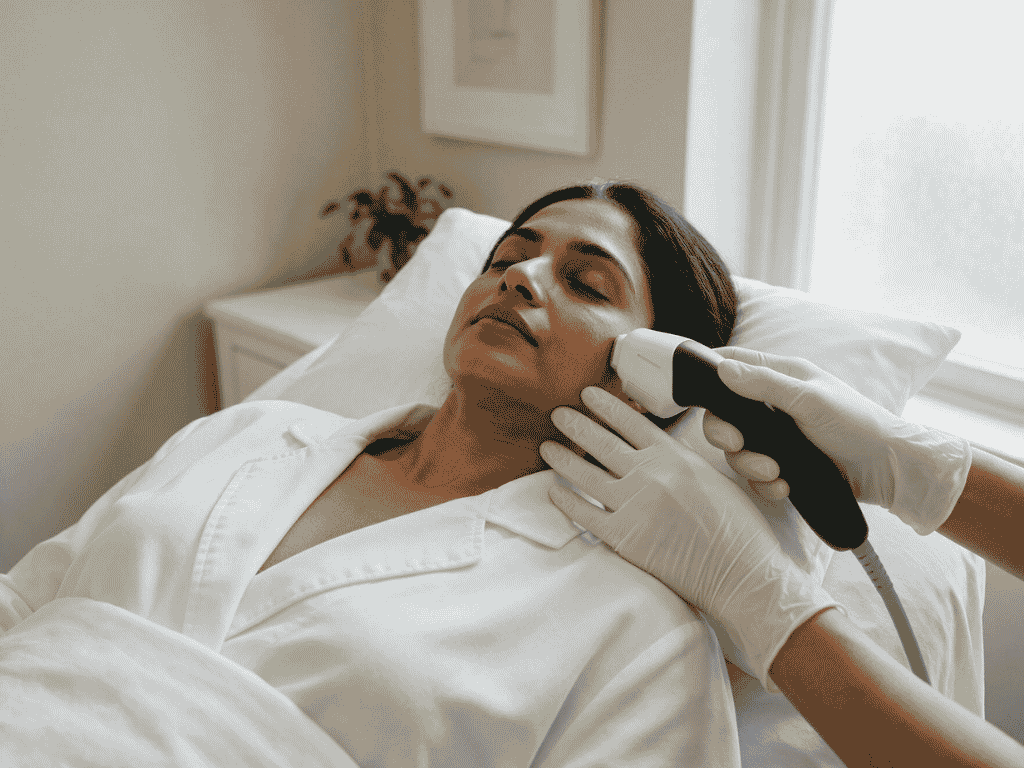
Thermage FLX uses monopolar RF at 6.78 MHz. The handpiece delivers energy through a single-use tip while cooling helps protect the skin’s surface. Vibration is also used during treatment.
The RF energy heats a broader volume that includes the collagen-rich dermis and fibrous support strands below it. The treatment does not reach one fixed depth in every patient. The tip selected, energy level, number and placement of pulses, skin contact and individual anatomy all matter.
Is the Commonly Quoted 4.3 mm Depth Exact?
No. The often-repeated 4.3 mm figure is best understood as a simplified marketing description, not a universal depth that applies to every pulse and every face. The FDA summary for Thermage FLX does not establish 4.3 mm as a fixed biological treatment plane.
What Is Thermage FLX FDA-Cleared For?
Thermage FLX received FDA clearance in 2017 under K170758. Its listed uses include non-invasive treatment of wrinkles and rhytids, which is the medical term for wrinkles. The indication specifically includes wrinkles around the eyes and on the upper and lower eyelids.
Thermage has the longest commercial history of the three platforms discussed here. In suitable patients, results are generally expected to be gradual and modest rather than comparable to surgery.
How Sofwave Works
Sofwave uses high-intensity therapeutic ultrasound instead of RF. It sends short pulses of ultrasound into the dermis, where they create small, controlled zones of heat. Contact cooling helps protect the surface of the skin.
The FDA summary describes a treatment depth of about 1 to 2 mm, with the thermal effect confined to a shallow focal zone. This makes the treatment level more clearly defined than the broad, variable heating pattern produced by monopolar RF.
What Is Sofwave FDA-Cleared For?
Sofwave’s 2021 clearance, K211483, specifically lists non-invasive aesthetic treatment to:
- Improve facial lines and wrinkles
- Lift the eyebrow
- Lift loose tissue under the chin and on the neck
These indications apply to adults aged 22 and older.
The FDA submission included a multicentre US study in which 80 people were treated. Independent reviewers and objective measurements found changes in eyebrow position and lax tissue under the chin and on the neck. The average measured eyebrow lift was less than 1 mm, which is a useful reminder that a statistically measurable result may still look subtle in the mirror.
Sofwave’s shallow, defined treatment zone may be useful when the main concern is fine wrinkling or mild dermal looseness and preserving facial volume is important. It cannot replace lost fat, move significantly descended tissues back into position or remove excess skin.
XERF vs Thermage FLX vs Sofwave at a Glance
| Device | Energy used | How the heat is delivered | US FDA indication relevant to this comparison | Evidence position |
| XERF | Dual-frequency monopolar RF | Broader and variable heating, with shallow, middle and deep settings | Current clearance does not specifically list facial lifting, skin tightening or wrinkle reduction | Promising short-term human data, but no clinical testing was included in the FDA submission |
| Thermage FLX | 6.78 MHz monopolar RF | Broader, three-dimensional heating with surface cooling | Wrinkles and rhytids, including around the eyes and on the eyelids | Longest commercial history of the three |
| Sofwave | Focused ultrasound | Shallow, more defined focal heating at about 1 to 2 mm | Facial lines and wrinkles, eyebrow lifting, and lifting loose tissue beneath the chin and on the neck | FDA submission included a multicentre clinical study with 80 treated participants |
Which Device May Suit Which Concern?
Fine Lines or Mild Crepey Skin
Sofwave may be considered when the concern sits mainly within the skin itself, such as fine lines or mild crepey looseness. Its relatively shallow, defined treatment zone can also be relevant when avoiding broader deep heating is a priority.
Mild Facial Laxity or Wrinkles Around the Eyes
Thermage FLX may suit patients who want an established RF platform for mild to moderate laxity or wrinkles, including the eye area. Its heating pattern is broader than Sofwave’s, so treatment planning and energy selection need to match the person’s anatomy.
Patients Specifically Asking for XERF
XERF may be discussed when dual-frequency RF is clinically appropriate. The consultation should include a clear explanation that cosmetic facial lifting is not specifically included in its current US FDA indication and that published human evidence remains relatively early.
These are not automatic treatment rules. A thin face can still have different types of laxity, and two people with similar-looking jowls may need entirely different plans.
What About Thin or Hollow Faces?
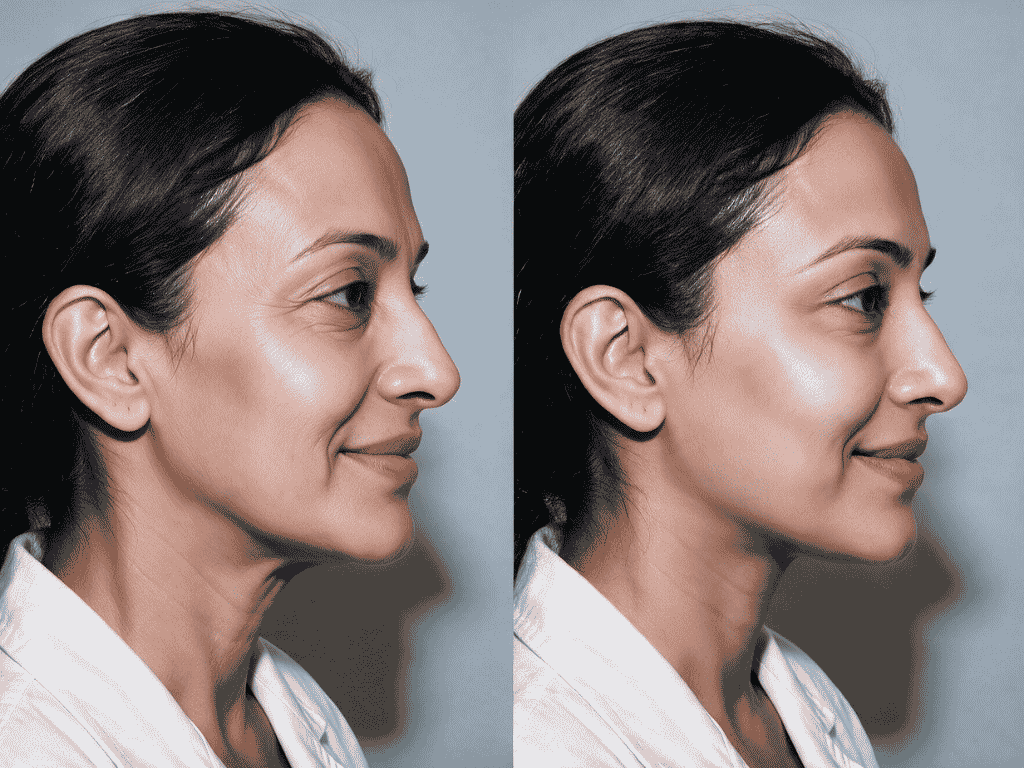
Skin looseness and volume loss are not the same problem. A face can look older because the skin is less firm, because fat compartments have reduced or shifted, because deeper support structures have changed, or because several of these changes are present together.
Heating devices do not replace missing volume. In a naturally thin or already hollow face, broader or deeper treatment should be planned carefully. The aim is to avoid treating a problem the patient does not have. Sofwave’s shallower focal zone may sometimes be considered when preserving volume is a priority, but device choice still requires an in-person assessment.
Are These Treatments Suitable for Indian Skin?
RF and ultrasound do not work by targeting melanin, the pigment that gives skin its colour. This means they can generally be used across a wide range of Indian skin tones.
That does not make them risk-free. Too much heat, poor contact, inadequate cooling or unsuitable settings can cause a burn or significant inflammation. In melanin-rich skin, either can lead to post-inflammatory hyperpigmentation, meaning a dark mark that appears after skin injury or irritation.
Careful patient selection, appropriate settings and treatment by a properly trained clinician matter more than the device name alone.
What These Devices Cannot Do
None of these treatments produces a surgical facelift. They may improve mild laxity, but they cannot reliably correct major volume loss, advanced jowls, marked ligament descent or a large amount of excess skin.
If the expected result is close to surgery, changing from one energy device to another will not solve the mismatch. The first step is a facial assessment that identifies whether the main issue is the skin, facial volume, deeper support, muscle activity or excess tissue.
FAQ
Is XERF FDA-cleared for facial lifting?
Is XERF better than Thermage FLX?
Does Thermage FLX always reach 4.3 mm deep?
What is the main difference between Sofwave and Thermage FLX?
How many sessions are needed?
Which treatment is better for a hollow face or early jowls?
Book a Consultation
A consultation can help determine whether the visible concern comes mainly from the skin, loss of volume or deeper facial support. That distinction should guide treatment selection.
Book a consultation: wa.me/919381218003
— Dr. Nishita Ranka | Consultant Dermatologist | Dr. Nishita’s Clinic for Skin, Hair & Aesthetics, Hyderabad
Sources
Medical review note: Device availability, labelling and permitted uses can differ by country. Dr. Nishita Ranka should confirm the final clinical recommendations and local regulatory wording before publication.
Explore More Articles: